The CCDC Effect: John Brunelle Interviews Tiam Rastegar
From an Idea to a $1.8 Billion Impact: How CCDC Helped Build Boise’s Entrepreneurial Ecosystem
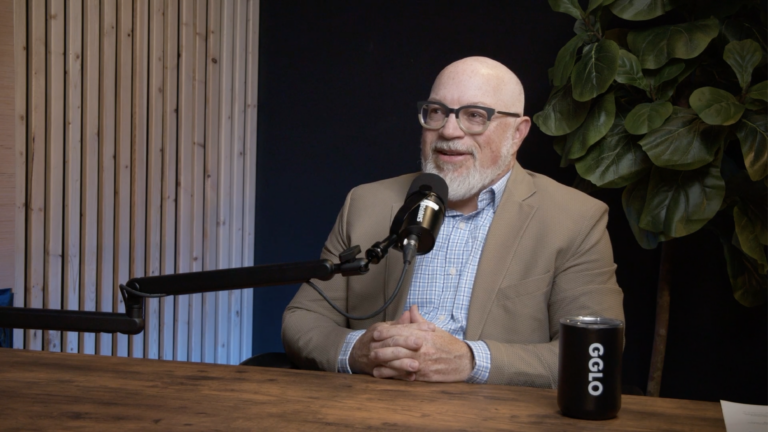
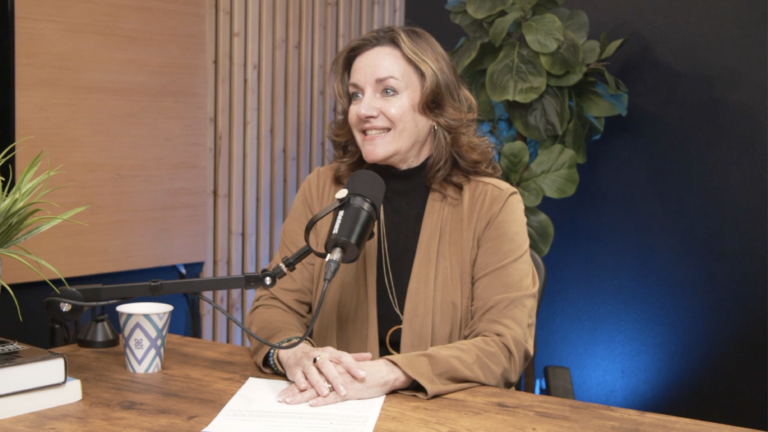
In Episode 5 of The CCDC Effect, Capital City Development Corporation Executive Director John Brunelle sits down with Tiam Rastegar, longtime executive director of Trailhead, for a wide-ranging conversation about entrepreneurship, economic development, public-private partnerships and the evolution of Boise’s startup culture.
Rastegar’s story is deeply personal. Born in Iran during the Iran-Iraq War, he fled with his family to Germany as a refugee, eventually came to Boise as an exchange student, graduated from Boise State University and built a career that exposed him to manufacturing, startups, acquisitions and entrepreneurs across the country. Those experiences ultimately led him to Trailhead — an organization he came to view as the intersection of three things that mattered most to him: business, people and community.
A Life Shaped by Change and Entrepreneurship
Rastegar’s early life was defined by upheaval. His family left Iran and rebuilt their lives in Germany, where his parents eventually started a restaurant after discovering that their professional credentials were not recognized.
The business ultimately failed, and Rastegar watched his father spend years paying off the resulting debt. Rather than turning him away from entrepreneurship, the experience gave him a lasting appreciation for both its potential and its risks.
Years later, that experience helped shape how he viewed Trailhead’s mission. If entrepreneurs could learn from people who had already made the mistakes they were about to make, their chances of succeeding could improve dramatically. Rastegar describes that concept as “recycling success.”
Finding Boise — and Staying
Rastegar first came to Boise in 2000, when his father was hired by PKG and Rastegar attended Centennial High School as an exchange student. He initially intended to return to Europe after graduation.
Instead, complications over recognition of his American high school diploma brought him back to Boise. He enrolled at Boise State, met his future wife and ultimately made Boise home.
His professional career began at PKG, where he spent 12 years working in highly regulated industries including medical devices, defense and aviation. He later joined Vacasa, where he was exposed to the startup environment and met scores of entrepreneurs while evaluating businesses for acquisition.
Those encounters strengthened his fascination with people who took risks, built companies from scratch and figured things out along the way.
The Origins of Trailhead
Brunelle and Rastegar spend considerable time documenting Trailhead’s beginnings.
Rastegar credits three primary founders — Faisal Shah, Jason Crawford and Karen Meyer — along with others who were pursuing similar ideas in Boise. A parallel effort called Tire Swing was eventually brought together with the Trailhead concept, creating a unified vision for an entrepreneurial hub.
The founders understood a problem firsthand: Boise needed a stronger ecosystem where entrepreneurs could find talent, mentors, resources and one another.
But the vision required more than entrepreneurs.
Rastegar describes the successful model as a “three-legged stool” involving entrepreneurs, private industry and the public sector. Companies including Micron and Albertsons became involved, while the City of Boise and CCDC provided critical public-sector support.
CCDC Provided a Tool the City Couldn’t
One of the most important distinctions in the interview is the difference between the roles played by the City of Boise and CCDC.
Rastegar acknowledges that people have not always understood that CCDC is separate from the city or recognized the unique financial mechanisms CCDC could bring to the partnership.
According to Rastegar, CCDC’s support was what “operationally launched the physical space of Trailhead.”
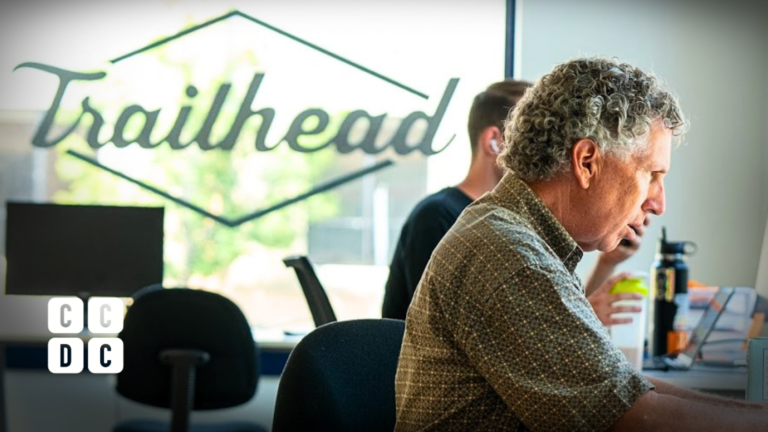
CCDC helped underwrite Trailhead’s downtown location at 500 S. 8th Street, initially making a multiyear commitment that included support for the physical space, programming and even furniture and building improvements.
Brunelle explains that CCDC viewed Trailhead as an extension of its economic development mission. Urban renewal wasn’t simply about buildings, sidewalks and infrastructure. Supporting entrepreneurship and creating jobs could also strengthen the economic foundation necessary for a successful downtown.
Rastegar goes even further, saying he considers CCDC a founding partner of Trailhead, even if that description isn’t technically contractual. CCDC’s agreement gave the organization a “North Star” by establishing clear expectations for programming and outcomes.
Urban Renewal Is Ultimately About People
As Rastegar learned more about CCDC, his perception of urban renewal also changed.
At first, the phrase brought buildings and construction to mind. But he came to see the larger purpose.
“My main takeaway was like, this is for people,” he tells Brunelle.
The infrastructure, placemaking and built environment were tools for a larger economic development mission. Trailhead complemented that work by helping create the businesses and jobs that could occupy those spaces and contribute to downtown’s economy.
Taking Over Trailhead
Rastegar became Trailhead’s executive director in 2018.
Before accepting the job, he conducted his own due diligence, interviewing 27 people who had interacted with the organization. What he heard convinced him that Boise wanted Trailhead to succeed.
He also saw something bigger: an organization capable of helping someone walk through the door with little more than an idea and eventually leave with an operating company creating economic impact.
One experience made the mission especially clear.
Before joining Trailhead, Rastegar quietly attended a Stand Up Startup event. He watched a young entrepreneur discuss not only her photography business but her work addressing a community need through the Boise Period Project.
For Rastegar, three things suddenly came together: business, people and community.
That became the personal purpose behind his work at Trailhead.
Put the Entrepreneur at the Center
Rastegar also challenged Trailhead’s original mission statement, which envisioned the organization as being “at the center of the entrepreneurial ecosystem.”
His concern was simple: What did that mean for Trailhead’s customer?
He proposed something much more direct:
“Our mission is to help entrepreneurs succeed.”
The board embraced the idea.
It represented an important philosophical shift. Trailhead’s success would no longer be defined primarily by the organization’s position in the ecosystem. Its success would be measured by the success of the entrepreneurs it served.
Boise Startup Week Changes the Trajectory
One of the defining moments of Rastegar’s tenure arrived shortly after he took the job.
Nick Crabbs walked into Trailhead, introduced himself and told Rastegar that the two of them were going to run Boise Startup Week — in six weeks.
Rastegar said yes.
That decision helped change both Trailhead and its standing in the community.
In only six weeks, Rastegar found himself working “shoulder to shoulder” with more than 80 organizations across Boise. The first year under their leadership included an extraordinary 104 events in four days and the beginnings of what would become a major pitch competition.
The event evolved into Boise Entrepreneur Week and became what Rastegar calls the centerpiece of Trailhead’s programming. Other programs grew around it — preparing entrepreneurs to participate and then helping promising companies continue developing after the event.
Pitch competition awards that began at much smaller amounts eventually grew to $50,000 each across three competitions.
Changing Boise’s Story
By 2019, Trailhead had fully assumed responsibility for Entrepreneur Week, and momentum was building.
That year, Boise landed fourth on Inc. magazine’s list of Surge Cities, ahead of the Bay Area, Portland and Seattle.
For Rastegar, the recognition was about more than rankings. It helped tell a new story about Boise.
Boise was already known for affordability and quality of life. Trailhead and its partners wanted to add something else:
Boise was a great place to build a business.
That message began attracting attention from entrepreneurs, investors and others outside Idaho.
Then the Pandemic Hit
Just as Trailhead appeared to have reached a breakthrough, COVID-19 threatened the entire model.
Trailhead was fundamentally a people business. Its energy came from entrepreneurs gathering, exchanging ideas, attending events and working alongside one another.
Suddenly, the building was empty.
Rastegar describes finding himself alone at Trailhead and genuinely unsure how the organization would survive.
Trailhead responded by partnering with Boise State’s Venture College on a program called Survive to Thrive, moving programming online and holding two Boise Entrepreneur Weeks remotely.
Rastegar also had to furlough staff and operate the organization largely by himself for a period.
But he was determined to “keep the heartbeat going.” The concern was that if Entrepreneur Week disappeared during the pandemic, the momentum and community surrounding it might disappear as well.
CCDC’s Support Meant More Than Money
One of the strongest portions of the interview comes when Rastegar explains the intangible value of CCDC’s involvement.
When Trailhead approached potential private sponsors, one of the questions was inevitably: Who else believes in this?
Having CCDC as a long-term partner gave Trailhead credibility.
“If Trailhead went out and had CCDC as a partner, it projected competence, it projected certainty,” Rastegar explains.
CCDC’s participation effectively validated Trailhead to other institutions considering whether to invest their own money, time and reputation.
Rastegar says CCDC’s support was different from that of the city or private companies. Its unique financial mechanisms gave Trailhead something it could leverage to attract other partners.
For him, that is the essence of a successful public-private partnership: How do we do better together? How do we go further together?
Measuring the Results
By 2026, the numbers Rastegar shares with Brunelle demonstrate how far the effort had come.
According to Rastegar, over Trailhead’s first decade:
- Its entrepreneurs and programs generated an estimated economic development impact exceeding $1.8 billion.
- More than 1,000 higher-than-average-paying jobs were created.
- Trailhead awarded more than $1.4 million in non-dilutive cash to founders.
- Trailhead participants raised more than $380 million in venture capital.
- Members and program participants generated more than $480 million in revenue.
Rastegar compares the result to a flywheel. Once companies begin succeeding, they create jobs, generate revenue, attract investment and produce experienced entrepreneurs who can mentor and invest in the next generation.
The Bigger Achievement: A Startup Culture
For Rastegar, however, Trailhead’s most significant achievement may be harder to put on a spreadsheet.
He believes Boise has developed an authentic startup culture.
Boise already had the ingredients: a history of successful businesses, major corporations, universities, an entrepreneurial spirit and what Rastegar calls a Western frontier mentality of bootstrapping and perseverance.
The challenge was connecting those ingredients.
The resulting culture gives first-time founders access to experienced entrepreneurs who can “recycle” their success through mentoring, investment and advice. It has also created enough momentum to attract venture capital and seed funds to Boise.
Rastegar identifies another ingredient that may be even more important:
People in Boise genuinely want to see one another succeed.
He calls that a “secret ingredient” that is difficult to quantify or replicate.
Knowing When an Organization Is Ready for Its Next Leader
The interview also comes at a significant moment personally for Rastegar.
He tells Brunelle that he had recently resigned from Trailhead. He did so without having his next position lined up because he believed the organization had reached a point where a different leader with a different skill set should guide its next chapter.
“My skillset took it to where it is now,” he explains, describing Trailhead as sustainable, supported by strong employees and backed by a strong board.
For Rastegar, leaving wasn’t a rejection of the mission. It was recognition that a successful organization should eventually become bigger than the person leading it.
Brunelle praises Rastegar as a high-impact leader whose legacy lives in the employees, founders, board members, sponsors and community members he influenced.
The CCDC Effect: Building an Ecosystem Together
Asked directly what effect CCDC had on Trailhead, Rastegar says CCDC “invigorated our existence and our mission.”
The interview makes clear that Trailhead’s success was never the product of one organization.
Entrepreneurs brought ideas and risk-taking. Corporations brought expertise, resources and investment. The city brought public leadership. Universities brought education and talent. Trailhead connected and supported founders. And CCDC provided a unique form of long-term economic development investment that helped turn the concept into something tangible.
The results were not simply a coworking space or an annual event. They were companies, jobs, investment, revenue, relationships and a growing culture of entrepreneurship.
Rastegar closes with an observation that captures both the Trailhead story and the larger theme of The CCDC Effect:
“It takes a village and we’re all part of this village.”
And that may be the larger lesson of the conversation: economic development is at its most powerful when public investment, private enterprise and community leadership reinforce one another — creating an ecosystem capable of producing opportunities far beyond the original investment.