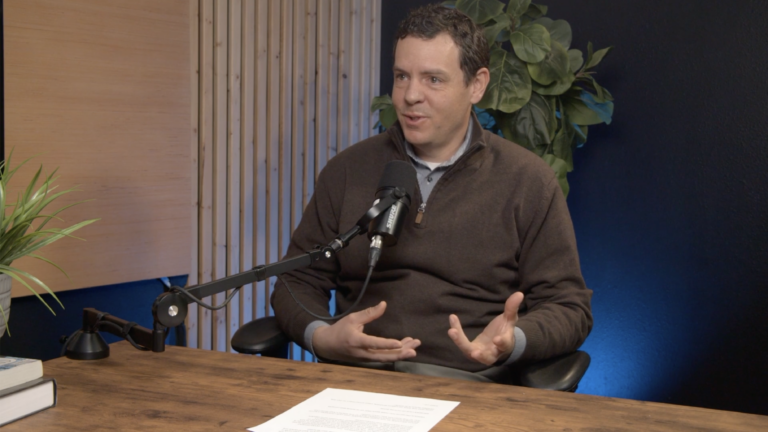
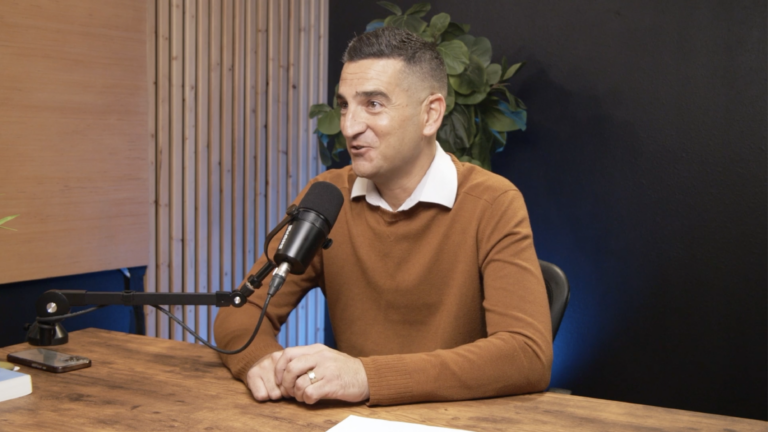
The CCDC Effect: John Brunelle Interviews Mark Sindell
Designing a Better Boise: How Urban Renewal, Great Design and Public-Private Partnerships Transformed Downtown
In Episode 6 of The CCDC Effect, Capital City Development Corporation Executive Director John Brunelle sits down with Mark Sindell of GGLO to discuss nearly 15 years of collaboration that has helped reshape downtown Boise.
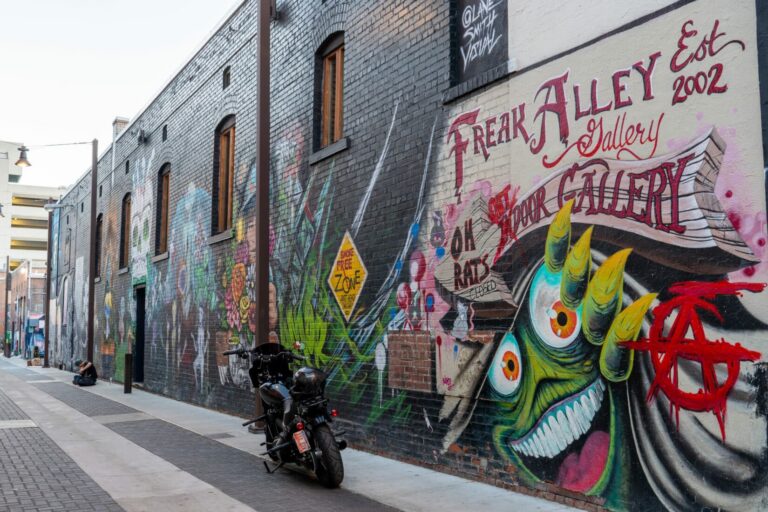
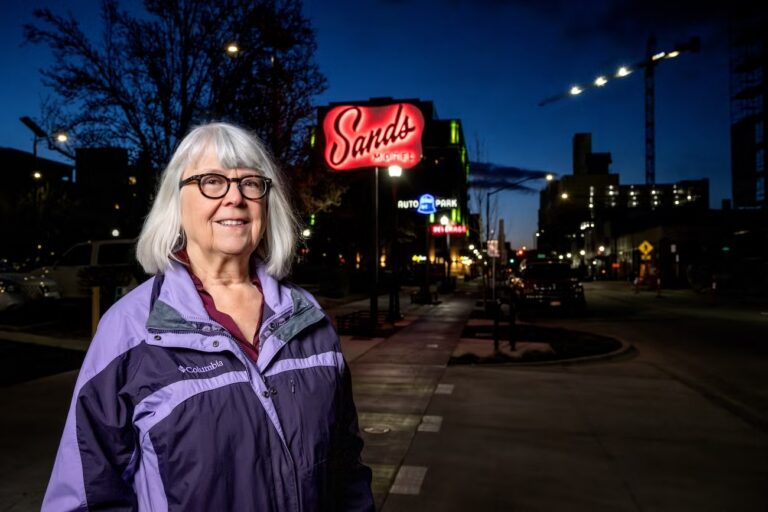
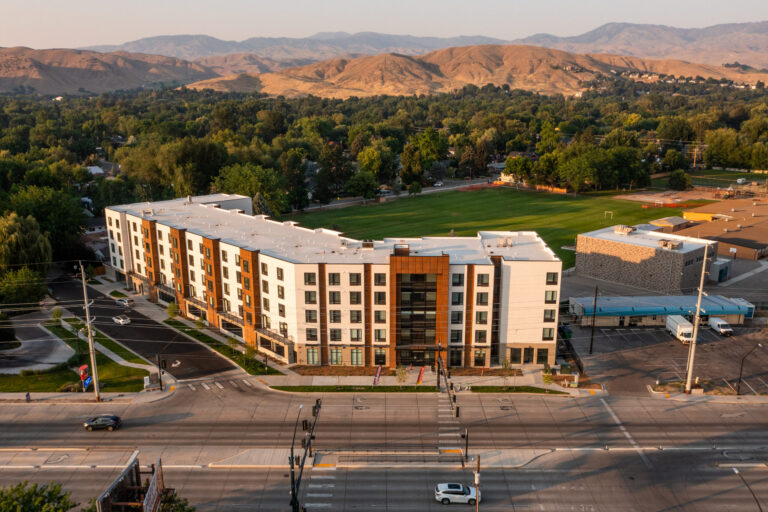
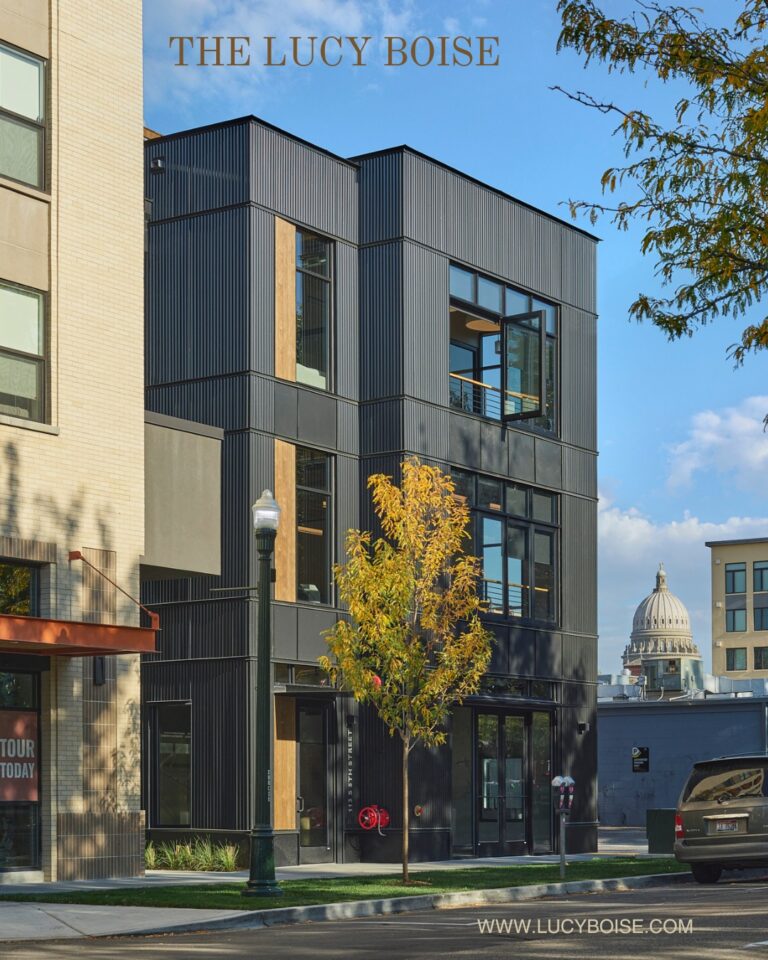
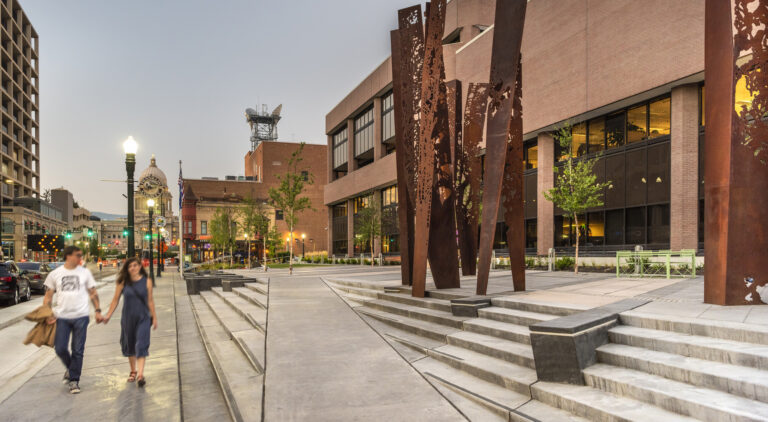
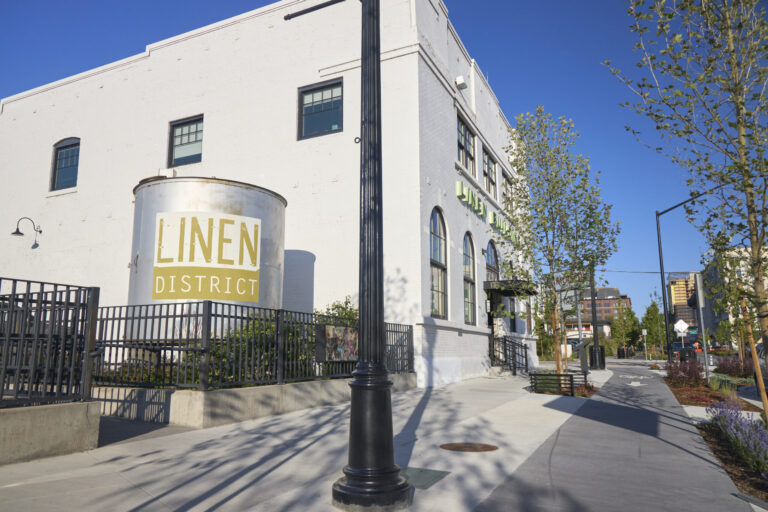
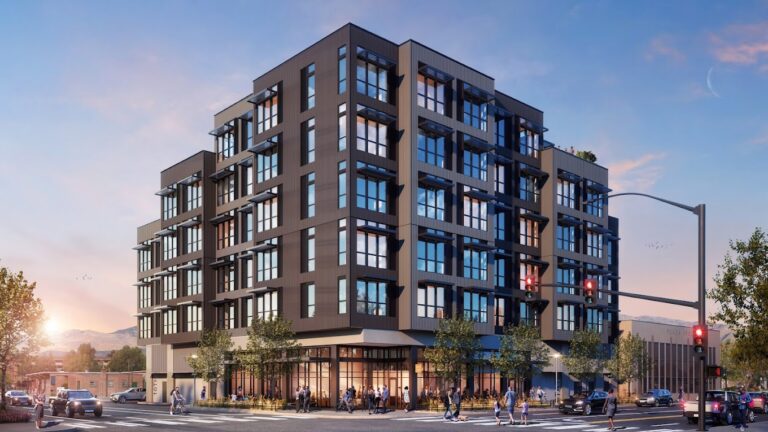
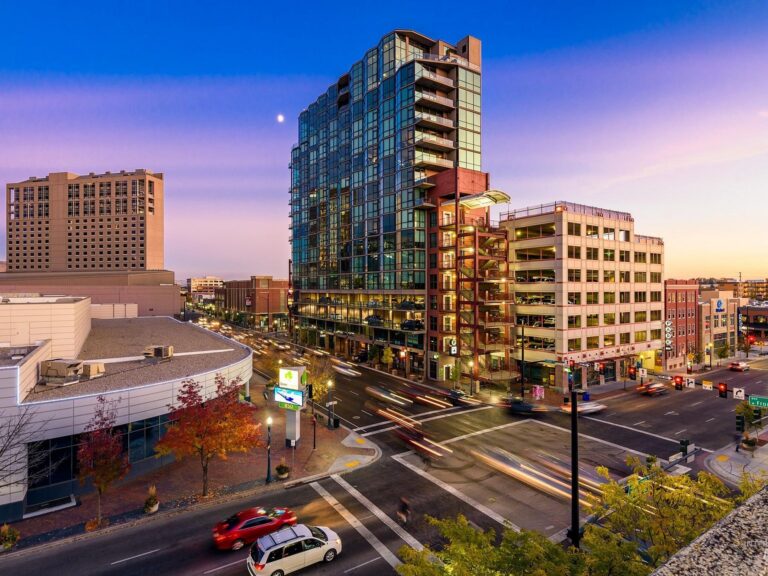
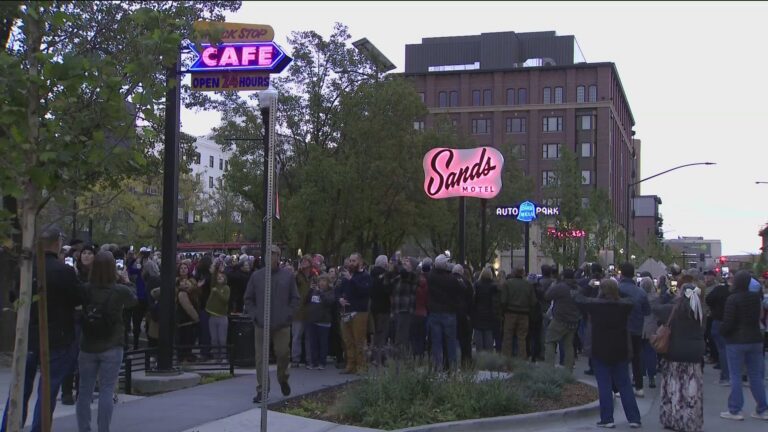
Their conversation moves from Sindell’s early career in the Pacific Northwest to some of Boise’s most recognizable projects — The Afton, Boise City Hall Plaza, Freak Alley, Cherie Buckner-Webb Park, the Linen Blocks and Grove Street, North End Lofts and Wilson Station.
Running through all of those projects is a common theme: thoughtful design can create great places, but the combination of design, infrastructure, public investment and private development can transform entire neighborhoods.
From the Pacific Northwest to Urban Design
Sindell grew up outside Seattle in Bellevue, Washington, in a family that combined artistic and analytical influences. His mother was an interior designer, while his father’s side of the family included attorneys. Add to that Sindell’s love of skiing, hiking, fly fishing and the outdoors, and he began looking for a profession that could combine all three interests.
He found it in landscape architecture and urban design.
While attending Washington State University, Sindell says he came to understand an important connection: if you want to protect open space and people’s access to nature, you also have to build cities well. Creating compact, livable urban environments became central to his professional philosophy.
His career eventually included major Pacific Northwest projects, from Seattle Center and hospitality developments to environmentally innovative projects. He later joined GGLO, where he helped build the firm’s landscape architecture practice and became increasingly focused on sustainable urbanism and mixed-use environments.
The Afton Brings GGLO to Boise
Sindell’s relationship with Boise began in earnest around 2014, when GGLO pursued a CCDC request for proposals for a property that would eventually become The Afton.
CCDC had owned the warehouse property for years, and several previous development concepts had failed to materialize. The new proposal called for downtown condominiums at a time when residential development on that edge of downtown was still something of a market test.
The development was originally approached cautiously, with a first and second phase. But the market responded so strongly that the second phase moved forward before the first was even complete.
For Sindell, the project was also an introduction to Boise’s collaborative development culture. He had expected working with multiple public agencies to be difficult. Instead, he found CCDC, the City of Boise and other agencies generally working toward shared goals.
That experience helped establish GGLO in Boise and opened the door to more projects.
From City Hall Plaza to Old Boise
One of the next major opportunities was the redesign of Boise City Hall Plaza. Sindell recalls working directly with city leadership on a project that combined the city’s vision with CCDC financial participation.
That project helped put GGLO on the map locally.
Soon afterward, Sindell began working with property owner Clay Carley, CCDC and the city on a broader vision for Old Boise. At the time, much of the area consisted of surface parking lots and auto-oriented streets. The partners began planning how several properties could work together as part of a more complete neighborhood.
That relationship ultimately became personal for GGLO. After initially renting desks in Boise, the firm partnered on the development of its own office at Fifth and Grove.
Today, Sindell describes Old Boise almost as his Boise neighborhood — a place where he has watched streets, parking lots and individual development sites gradually become a connected urban district.
Freak Alley: Improving It Without Losing It
Freak Alley presented a very different design challenge.
The goal wasn’t to reinvent the space. It was to preserve what made it special while making it safer and more functional.
Sindell recalls cracked and heaved asphalt, geothermal water freezing in the alley during winter and dumpsters competing with the artwork for space. The team worked with businesses and other partners to address those problems.
But the guiding design principle was restraint.
“This needs to be about the art,” Sindell recalls.
Instead of overdesigning the alley, the team treated it like an outdoor gallery — clean paving, good lighting, improved accessibility and a simple environment that allowed the artwork to remain the star.
The result illustrates one of Sindell’s recurring themes: successful urban design doesn’t always mean adding more. Sometimes it means understanding what already works and carefully removing the things that get in its way.
Cherie Buckner-Webb Park and the Pink Tree
Cherie Buckner-Webb Park offered another opportunity to create something distinctive.
The surrounding area was still developing, and the team believed the park needed an attraction strong enough to draw people into the space. Various ideas were explored before the partners ultimately decided to concentrate the public art budget into one memorable installation.
The result was the park’s now-famous pink tree with movable leaves.
Brunelle recalls the significant investment involved, while Sindell notes that no one could have predicted exactly how popular it would become. Brunelle calls it one of the most photographed locations in downtown Boise.
The park also proved unexpectedly adaptable. Designed in part as an outdoor coworking environment with Wi-Fi and laptop connections, it became particularly useful during the COVID-19 pandemic, when outdoor gathering and work spaces took on new importance.
Grove Street and the Linen Blocks: Designing for Culture
Of all the projects discussed, Sindell identifies the transformation of Grove Street and the Linen Blocks as one of the projects of which he is most proud.
His concern was that rapid development can sometimes erase the history and character that made a neighborhood interesting in the first place.
“Just because it’s new and works on paper,” Sindell explains, doesn’t necessarily mean the community will consider it successful.
The solution was to intentionally weave Boise’s history into the redesigned streetscape.
One of the most visible examples became the historic neon sign collection. Old signs that might easily have been discarded were instead restored and displayed as an outdoor neon gallery.
Getting there wasn’t easy. Questions arose over ownership, insurance, liability, maintenance and the involvement of multiple public agencies.
Sindell recalls telling the project team that resolving those issues would be difficult — but that the signs would ultimately become one of the things people cared about most.
They kept working through the problems, and the neon gallery became a defining feature of the Linen Blocks.
More Than a Streetscape
The Grove Street improvements went well beyond historic signs.
The project incorporated a major protected bicycle facility and a landscape inspired by the Boise Foothills, including a pollinator-garden approach that creates what Sindell describes as essentially six blocks of garden during the growing season.
Brunelle observes that walking through the area creates a feeling of being transported into a different environment — almost without realizing why.
Today, Sindell often brings visiting colleagues on what he calls his “downtown tour” — which he jokes is really the “CCDC tour.”
Visitors are struck not simply by the quality of individual projects but by how quickly entire areas changed. In the Linen Blocks, streetscape improvements occurred alongside new restaurants, shops, hotels, housing and mixed-use development.
The result is no longer a collection of isolated projects. It is a neighborhood.
Did CCDC Orchestrate All of This?
Brunelle recalls being asked how CCDC managed to orchestrate so many projects to happen at approximately the same time.
His answer: it didn’t.
Sindell agrees that timing and some luck played a role. But he adds an important qualifier — years of foresight and planning had already put the pieces in place.
Urban renewal districts established the financial structure, infrastructure and partnerships necessary for investment to occur when market conditions aligned.
Sindell says roughly 80% of his current work is in urban renewal districts throughout the Mountain West. When he works outside one, he is reminded how much more difficult it can be to create the partnerships and momentum necessary to get complicated projects built.
What Urban Renewal Actually Does
That leads Brunelle to the central question of The CCDC Effect: What difference does urban renewal actually make?
Sindell’s answer is unequivocal.
Many of these projects, he says, “would not happen either for a decade or at all without urban renewal.”
That is particularly true in today’s environment of high construction and property costs and difficult commercial real estate economics.
Often the gap preventing a project from moving forward isn’t enormous. It might be undergrounding a power line, relocating utilities, installing infrastructure or completing street frontage improvements.
Those investments can turn a difficult property into a development-ready site and accelerate private investment.
CCDC’s Holistic Approach
Sindell believes CCDC’s greatest strength is that it looks beyond individual development sites.
Infrastructure matters, but so do streets. Streets need to serve cars, pedestrians and bicycles. Parking matters. So do plazas, parks and gathering places.
All of those pieces contribute to livability.
Sindell tells Brunelle that among the urban renewal districts where he works, CCDC stands out for taking a particularly holistic approach to creating community destinations.
Brunelle describes CCDC as something of a “Swiss Army knife” — an agency capable of helping both public and private partners solve the specific problems standing between an idea and a completed project.
North End Lofts: Listening to the Neighborhood
The North End Lofts project demonstrates another important part of successful urban development: working with the people who already live nearby.
The site, formerly a gas station, was small and located at an important gateway between downtown and the North End. Sindell initially questioned whether the desired density could even fit on the property — or whether nearby residents would support it.
Rather than guess, the team talked to them.
Residents were generally supportive of housing and density at the location but wanted a building that stepped appropriately and felt elegant and gracious.
The design team incorporated that feedback and continued showing neighbors design iterations as the project developed.
The finished building closely reflects the original design renderings — something Brunelle and Sindell both identify as an important measure of success.
Wilson Station: “Go Big or Go Home”
Wilson Station presented yet another challenge.
The team saw an opportunity to combine transit access, workforce housing programs and available density bonuses. Instead of proposing something conservative, they decided to “go big or go home.”
The proposal included substantially more density than competing concepts.
Then came the difficult part: making the economics and site configuration work.
The project involved construction costs, land costs, multiple properties and land exchanges needed to accommodate the garage. Sindell credits a committed team for continually asking how to solve problems rather than allowing those problems to stop the project.
The ultimate reward, he says, comes when you meet residents who now have a place to live that otherwise might not have been available to them.
Connecting the Pieces
As the conversation turns toward the future, Sindell and Brunelle discuss one of the less obvious accomplishments of downtown redevelopment: creating connections.
The improvements to 11th Street and Grove Street are not simply attractive individual streets. Together, they help create a network connecting the Boise Foothills toward the Greenbelt.
Sindell notes that many cities create good individual projects but fail to connect them into a coherent system.
That long-term connectivity is one of the things he finds particularly impressive about Boise.
Maximizing the Moment
Brunelle points out that many of the largest improvements came late in the life of CCDC’s urban renewal districts, when revenue was strongest and the agency had the resources to make significant investments.
At the same time, market conditions were aligning. Developers and investors were ready.
Sindell describes it as “maximizing the moment.”
There was luck and timing involved, but the opportunity could only be maximized because years of planning, infrastructure investment and partnership-building had already prepared the ground.
The CCDC Effect
The conversation between Brunelle and Sindell ultimately demonstrates that successful urban redevelopment is rarely the result of a single project, organization or person.
It is cumulative.
A condominium project proves people will live downtown. A streetscape makes the next development more attractive. A park gives people a reason to stay. Public art creates identity. Infrastructure makes a previously difficult site developable. A bike lane connects neighborhoods. Housing adds residents who support restaurants and businesses. And private investment generates momentum for still more investment.
Over time, those individual decisions begin reinforcing one another.
Sindell says GGLO has learned a great deal through its work with CCDC and has become a strong believer in the urban renewal model. Looking back is particularly meaningful, he says, because during the work itself, everyone is usually focused on solving the next problem and moving to the next project. Only later do they get the opportunity to see the cumulative impact on the community.
That cumulative impact may be the best definition of The CCDC Effect: creating the conditions for great projects to happen, connecting those projects into great places, and investing with enough vision and patience that individual improvements ultimately become a transformed city.