The CCDC Effect: John Brunelle Interviews Kâren Sander
From Bringing People Downtown to Building the Places They Come For: Kâren Sander Reflects on Boise’s Transformation
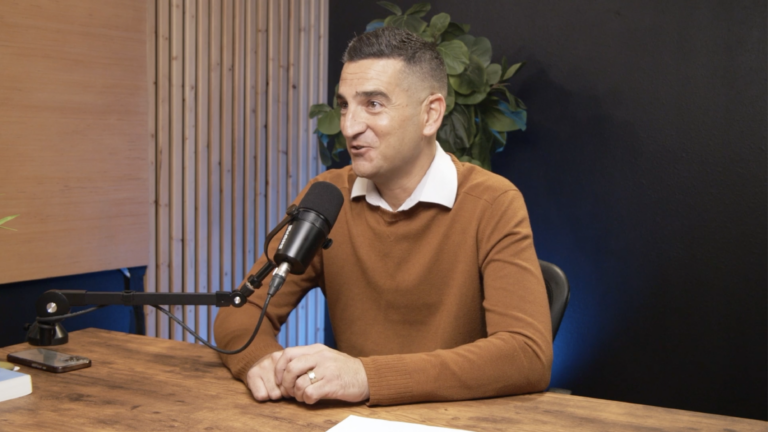
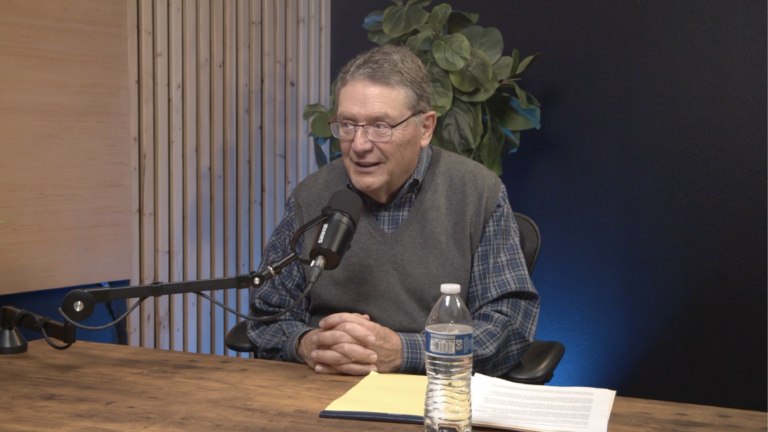
In Episode 4 of The CCDC Effect, Capital City Development Corporation Executive Director John Brunelle sits down with Kâren Sander for a conversation spanning more than three decades of change in downtown Boise.
Few people have experienced that transformation from as many perspectives as Sander. Her career has included sports promotions, nonprofit leadership, commercial real estate, the Urban Land Institute and infrastructure development. Most notably, she served as executive director of the Downtown Boise Association from 2004 to 2015 and today works in business development for HDR Engineering.
Through those roles, Sander has witnessed downtown evolve from a place with boarded-up buildings and an uncertain future into a collection of vibrant neighborhoods, public spaces, businesses and destinations. Her conversation with Brunelle focuses on one factor that consistently helped make that transformation possible: collaboration.
From South Africa to Boise
Sander’s path to Boise was anything but conventional.
Originally from South Africa, she worked in public relations, marketing and sports promotions, including rugby, cricket and the Ironman in South Africa. After coming to Idaho, she transitioned into the nonprofit sector, worked with the building industry and became involved with the Women’s Fitness Celebration.
Her connection to downtown grew through an event called “Fall for Boise,” a celebration of arts and activities in the city. That experience eventually led her to apply for the executive director position at the Downtown Boise Association. She was selected in 2004 and remained in the position through 2015 — a period of extraordinary change downtown.
Remembering a Very Different Downtown
Sander recalls one of her earliest visits downtown, when many buildings were boarded up and Boise was still debating where a regional shopping mall should be located.
Her initial reaction was stark: downtown didn’t feel particularly safe or inviting.
But she also witnessed early signs of what downtown could become.
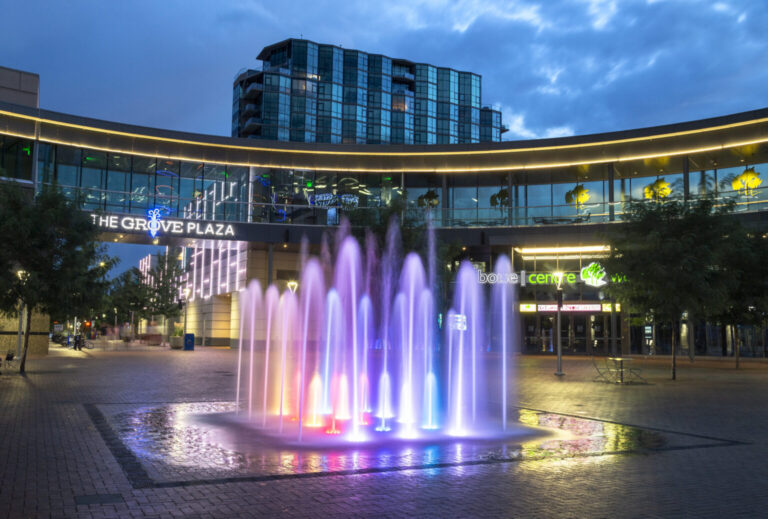
One came in 1989 at the newly created Grove Plaza, where the Idaho Lottery celebrated its launch with a major public event headlined by Juice Newton. Brunelle, who was professionally involved with the lottery at the time, reveals during the interview that he was the person who booked Newton for the event.
For both Brunelle and Sander, the celebration demonstrated something important: people would come downtown if they were given a compelling reason to be there. The Grove could serve as a community gathering place, and those gatherings could also support nearby restaurants and businesses.
Creating Reasons to Come Downtown
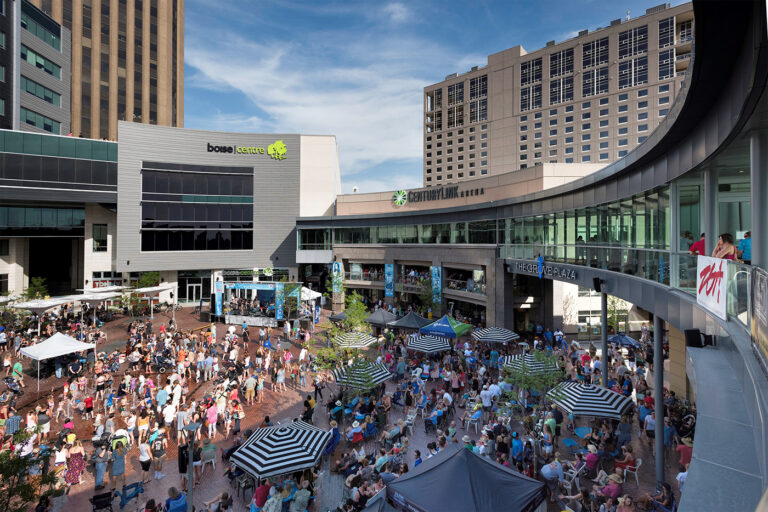
By the time Sander took over the Downtown Boise Association in 2004, downtown had gained momentum. The Grove Hotel, arena and convention center were established, and events were attracting people into the city center.
Sander describes DBA’s role as both promotional and practical.
The organization created events and promotions to bring people downtown, but it also focused intensely on keeping downtown clean, attractive and welcoming. Planters, banners, public art, beautification and maintenance were all part of creating a place where people felt comfortable.
“You can never take your eye off the ball when it comes to a place,” Sander tells Brunelle.
If an area isn’t cared for, she argues, people notice — and eventually they may stop coming.
“CCDC Builds It, We Take Care of It”
The conversation highlights the complementary roles played by organizations throughout downtown.
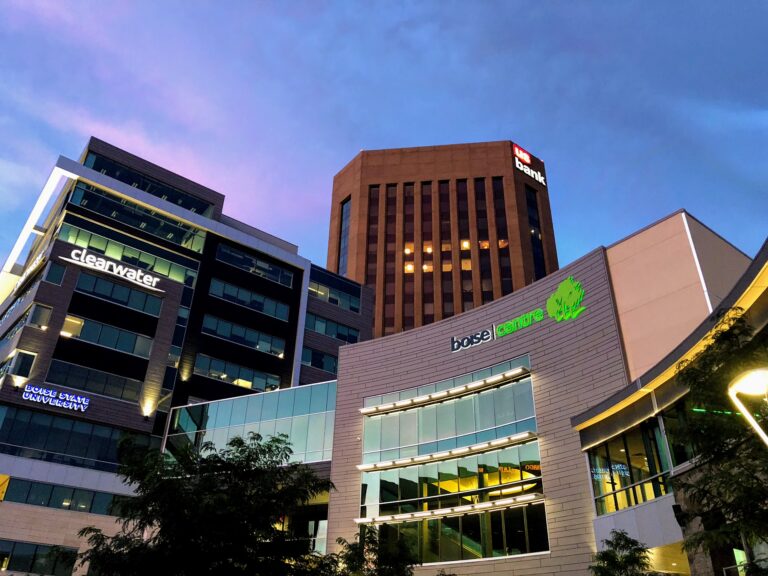
CCDC could invest in infrastructure, public spaces and the built environment. The Downtown Boise Association could activate those spaces, attract visitors and support businesses. The City of Boise, Boise Centre, Visit Boise, the Chamber and other organizations brought their own resources and responsibilities.
Sander recalls a simple phrase DBA used to describe its relationship with CCDC:
“CCDC builds it, we take care of it.”
That partnership mattered because downtown’s success wasn’t simply about constructing buildings and streets. It required bringing people into those spaces and creating the activity and energy that made downtown feel alive.
Weathering the Great Recession
Sander’s tenure at DBA included some difficult years.
Downtown still had numerous surface parking lots — which Sander jokingly calls “development opportunities” — and there remained uncertainty about how downtown would grow and attract national retailers while continuing to support local businesses.
Then came the Great Recession.
The downturn of 2008 through 2010 was extremely difficult for downtown businesses. One of the most troubling moments came when Macy’s announced it was closing its downtown store.
Sander remembers sitting back in her chair after receiving the news and wondering, “How are we going to weather this?”
Macy’s was a major downtown anchor, and its loss led some to predict another downtown decline.
Instead, DBA doubled down.
The organization expanded promotions and events, strengthened First Thursday and Alive After Five and looked for every possible reason to encourage people to continue visiting downtown.
CCDC and DBA also partnered on the “First Hour Free” parking program — a relatively simple incentive carrying an important message:Come downtown. We want you here.
The redevelopment of the long-stalled “hole in the ground” a few years later helped restore confidence and momentum.
Turning Utility Boxes Into Public Art
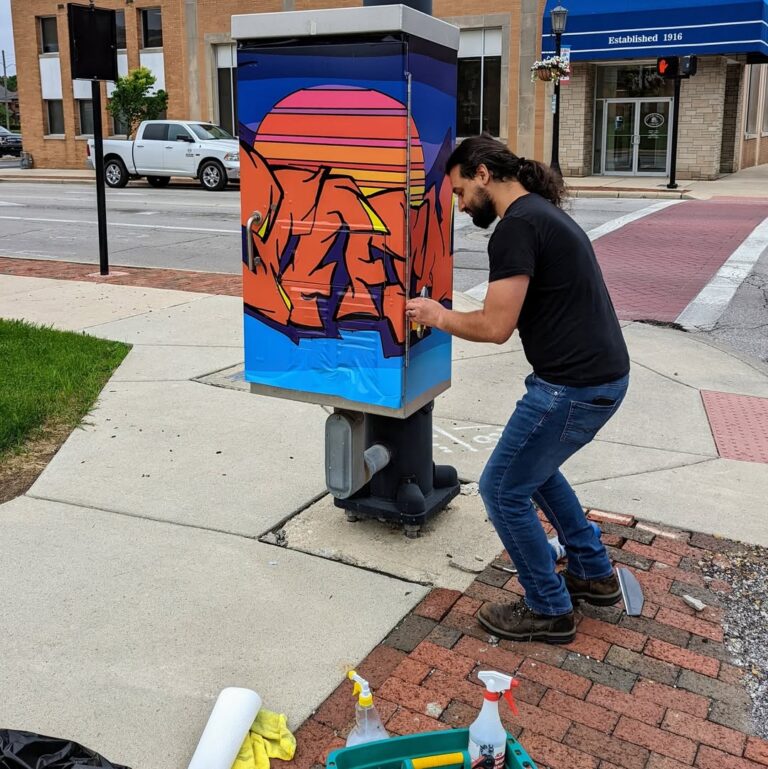
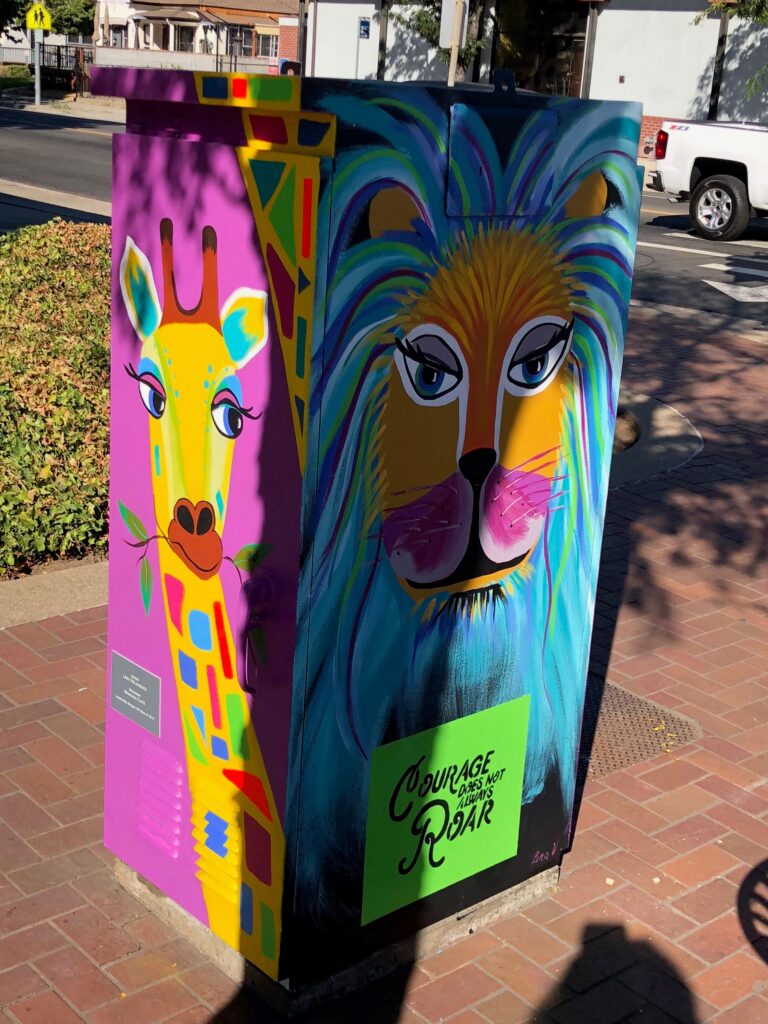
One of Sander’s most enduring contributions began with a practical problem: graffiti and posters on downtown traffic-control boxes.
While attending an International Downtown Association conference in Calgary, Sander and colleague Morgan Keating saw a program that placed artwork on utility boxes as a way to discourage tagging.
They returned to Boise believing the concept could work here.
Rather than simply copying the idea, they researched the costs of repeatedly removing graffiti and repainting boxes and began assembling partners, including ACHD, CCDC, the Boise Police Department and the City of Boise’s Arts & History Department.
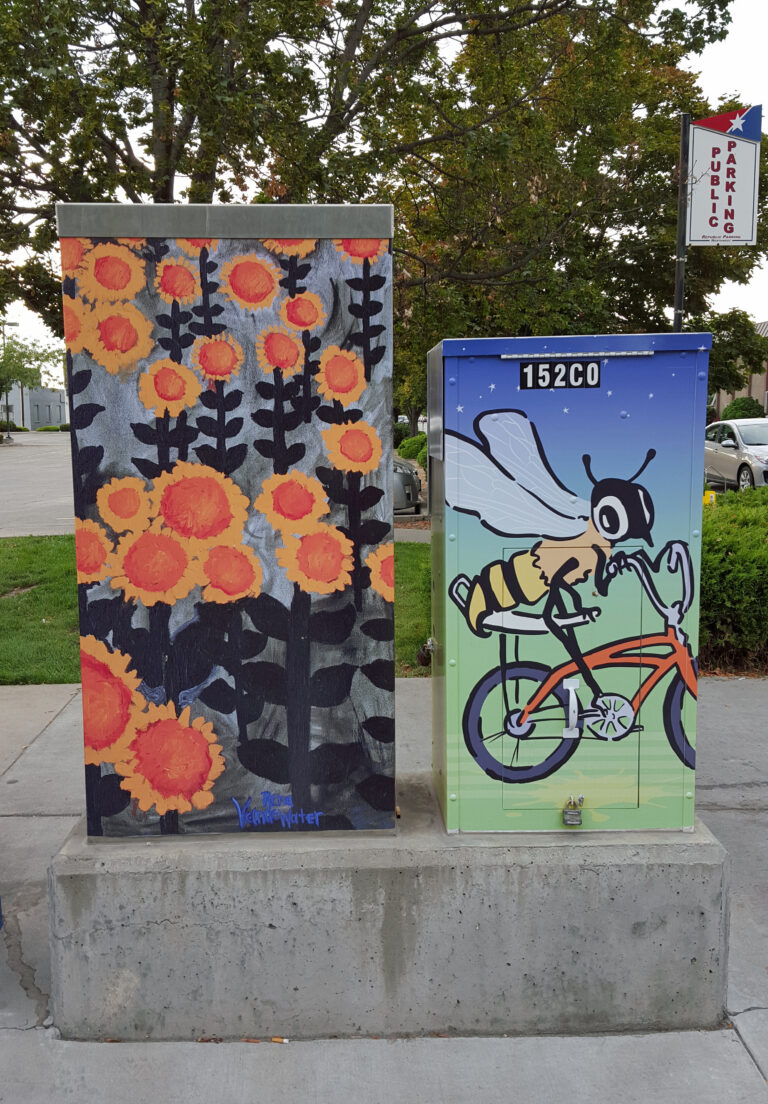
The concept evolved into using vinyl wraps created from original works by local artists. Artists were compensated, their work gained extraordinary public visibility and otherwise utilitarian pieces of infrastructure became part of Boise’s streetscape.
The first four boxes proved enormously popular. More followed, and the program eventually spread throughout Boise.
For Brunelle and Sander, the program represents a perfect example of collaboration: someone had an idea, several organizations brought different capabilities to the table, and instead of asking why it couldn’t be done, the partners asked how they could make it happen.
Art Creates a Sense of Place
The utility-box program leads Brunelle and Sander into a broader conversation about public art.
Sander points out that art now appears throughout downtown at every scale — from small pieces embedded in sidewalks and artwork on utility boxes to murals and major installations.
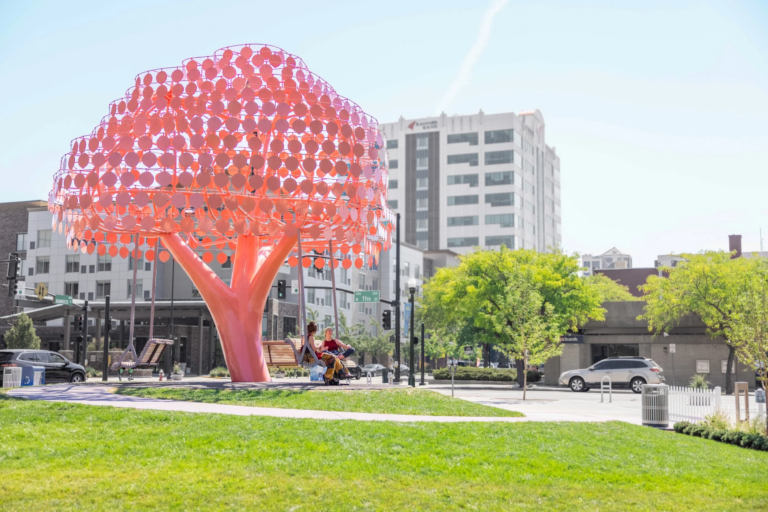
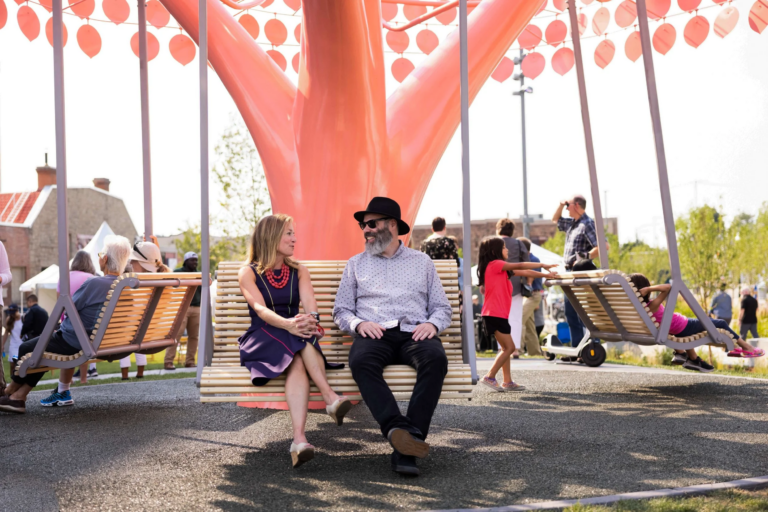
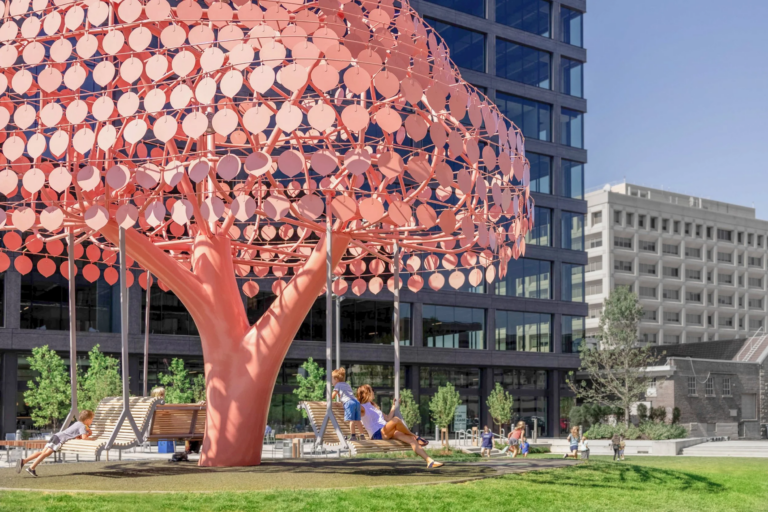
Brunelle highlights the pink tree at Cherie Buckner-Webb Park, where CCDC and its partners intentionally chose to make a significant investment in a large-scale, memorable piece of public art.
For both, these investments do more than beautify downtown. They create identity, interest and a sense of place.
Returning to Grove Street
After leaving DBA, Sander worked in commercial real estate and later led the Urban Land Institute, experiences that gave her additional perspectives on development and placemaking.
Her career eventually brought her to HDR Engineering as an area business development lead — and back into partnership with CCDC.
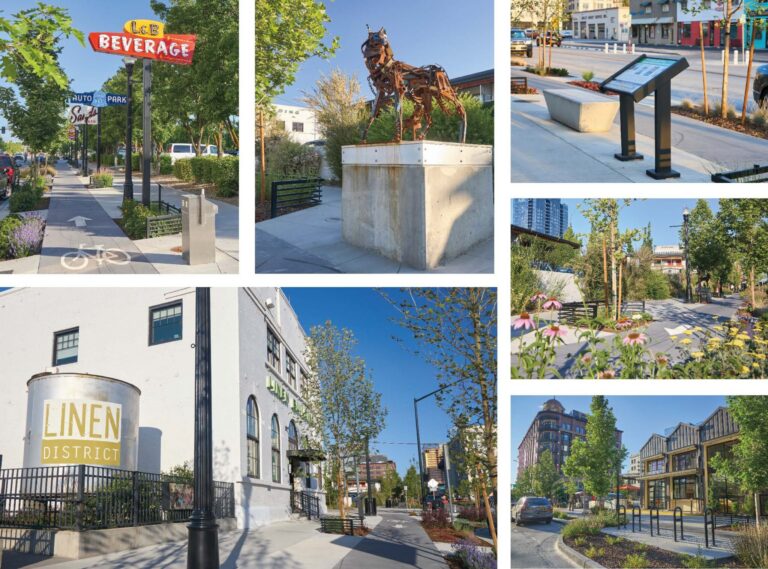
One of those opportunities was the Linen Blocks reconstruction along Grove Street.
For Sander, the project was especially meaningful because she had participated in conversations about the area more than 20 years earlier, when downtown leaders were identifying neighborhoods that needed additional attention and investment.
The Linen Blocks: Infrastructure That Creates a Neighborhood
Sander describes the Linen Blocks as an example of infrastructure’s ability to fundamentally change a place.
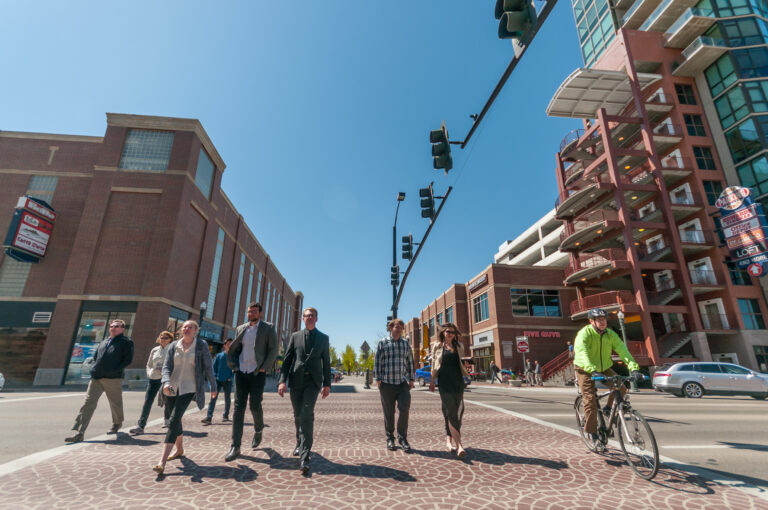
The project incorporated public art, safer bicycle infrastructure, improved pedestrian facilities and a redesigned street environment. At the same time, new private investment brought housing, hotels and businesses into the surrounding area.
Sander sees a direct relationship between the two.
CCDC’s investment in infrastructure helped establish the conditions that encouraged additional development and ultimately created a stronger neighborhood.
Brunelle notes that the street’s design sends an important message: Grove Street belongs not only to motorists but also to people walking, bicycling or pushing a stroller.
It is a street designed to bring people to downtown, rather than simply move cars through downtown.
The Complicated Work Behind Great Places
Sander also emphasizes something visitors rarely see: rebuilding infrastructure in an established downtown is extraordinarily complicated.
Beneath sidewalks and streets are utilities, basements and other infrastructure. Above ground are businesses, residents, property owners, pedestrians and traffic that must continue functioning during construction.
Projects require coordination among CCDC, the City of Boise, ACHD, property owners, businesses, engineers, designers, contractors and many others.
The Linen Blocks demonstrated what can happen when those groups remain committed to a shared outcome despite the disruption and complexity.
Downtown Becomes a Collection of Neighborhoods
One of Sander’s most interesting observations is that downtown Boise has increasingly developed distinct neighborhoods.
She compares it to larger cities, where moving a few blocks can bring someone into a district with an entirely different identity.
Downtown Boise increasingly has that quality. Eighth Street has its identity. Old Boise has another. The Westside and Grove Street have developed their own character.
“It created another neighborhood in downtown Boise,” Sander says of the Linen Blocks.
For her, that sense of place is one of the clearest signs of downtown’s maturation.
Taking the Lessons Beyond Downtown
The conversation eventually moves beyond downtown to places such as State Street and Gateway East.
Sander sees urban renewal and infrastructure investment as tools that can help other parts of Boise experience similar reinvestment.
In her current work, she is particularly interested in infrastructure that unlocks development — whether that means a street, intersection, bridge or even underground improvements that most people will never see.
State Street represents one of those opportunities, with transit-oriented development, affordable housing and private development beginning to reshape the corridor. Sander also discusses HDR’s work on State Street from 27th Street to Glenwood and the opportunity to coordinate again with CCDC.
The CCDC Effect: Collaboration Creates Place
Near the conclusion of the interview, Sander returns to the principle that has connected the many stages of her career.
No single organization could have created today’s downtown Boise by itself.
CCDC could not do it alone. Neither could DBA, the City of Boise, ACHD, developers, engineers, businesses or property owners.
The transformation occurred because those organizations repeatedly came to the same table with different tools, responsibilities and expertise.
Sander believes that same collaboration will be essential as Boise considers the future of downtown and its next generation of urban renewal districts. Urban renewal, she argues, needs to remain a viable tool because communities have relatively few mechanisms capable of making significant infrastructure investments that create places and stimulate redevelopment.
Her closing thought provides an appropriate summary of both the interview and the evolution of downtown Boise:
“The future is bright if people keep talking to each other.”
That may also be one of the simplest definitions of The CCDC Effect: bringing people and organizations together, investing in the places that need attention, and creating the infrastructure, activity and sense of place that allow a city to thrive.