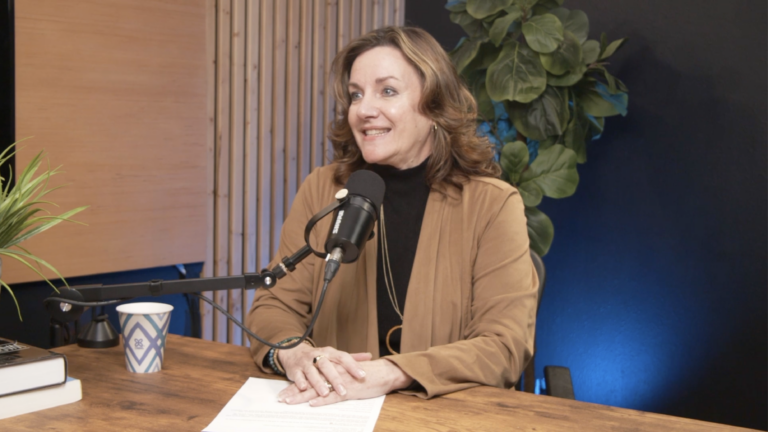
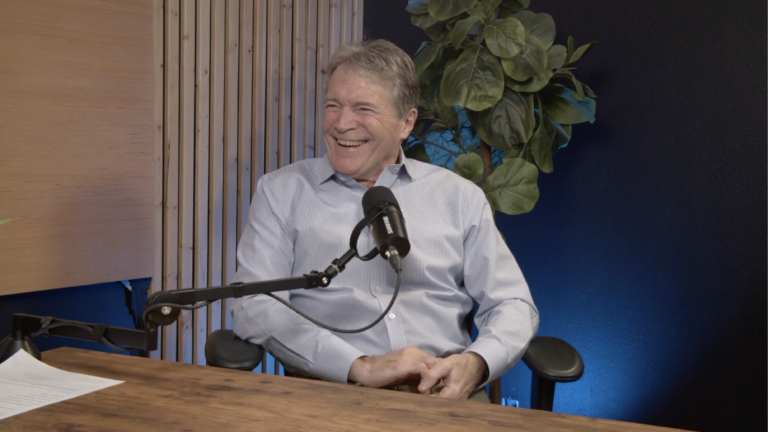
The CCDC Effect: John Brunelle Interviews Ryan Armbruster
Nearly 50 Years of Urban Renewal: Ryan Armbruster Reflects on the Legal Foundation Behind Downtown Boise’s Transformation
In Episode 2 of The CCDC Effect, Capital City Development Corporation Executive Director John Brunelle sits down with longtime CCDC attorney Ryan Armbruster for a detailed look at the legal, political and financial history behind Boise’s urban renewal program.
Few people have had a closer view of that history. Armbruster’s involvement stretches back to the late 1970s, when Boise was still pursuing the idea of a large downtown shopping mall and the organization now known as CCDC was operating as the Boise Redevelopment Agency.
Over the decades that followed, Armbruster helped guide the agency through the collapse of the mall concept, the creation of tax increment financing in Idaho, the establishment of new urban renewal districts, major court challenges, public-private partnerships and some of the most consequential redevelopment projects in Boise’s history.
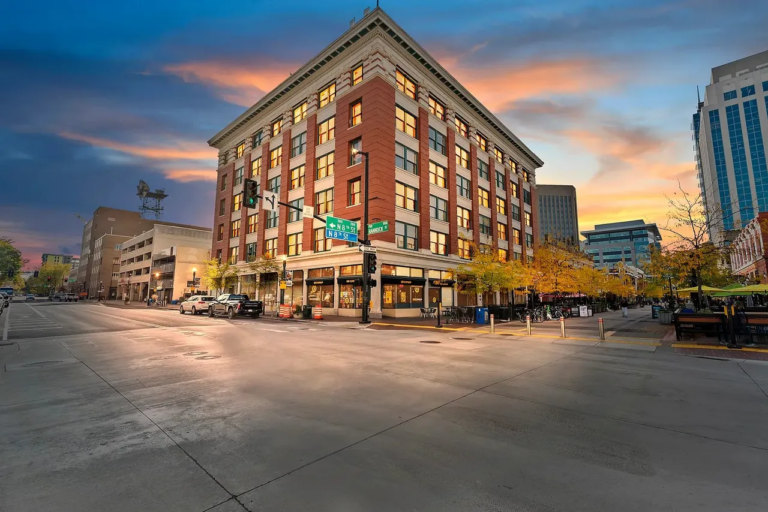
From Chicago to Boise
Armbruster grew up in Chicago and attended Bradley University in Peoria, Illinois, where an internship in the city ombudsman’s office gave him his first exposure to municipal government and neighborhood issues.
After graduating from the University of Denver College of Law in 1976, he came to Boise and joined the Boise City Attorney’s Office. His work eventually included representing the city’s Community Development Department, which at the time had ties to the Boise Redevelopment Agency and its use of federal community development funds.
When Armbruster joined the law firm Elam & Burke in 1979, the firm had recently begun representing the Boise Redevelopment Agency. That relationship would lead to a legal career deeply intertwined with urban renewal in Boise.
The Downtown Mall That Never Happened
When Armbruster first became involved, Boise was still pursuing a downtown regional shopping mall.
The Boise Redevelopment Agency had acquired much of an eight-block area in the heart of downtown using federal redevelopment funds. Several developers explored the mall concept, but the project never materialized.
A political shift followed.
Mayor Dirk Kempthorne and members of the Boise City Council concluded that the downtown mall concept was not going to work and that Boise needed an entirely new strategy.
The agency owned the land, but suddenly faced a fundamental question: What should it do with it?
A New Vision for Downtown
Boise brought in the Portland planning and design firm ZGF to help rethink the eight-block area.
Instead of one massive enclosed mall, the new vision called for a mixed-use downtown built around streets, offices, retail, public spaces and individual development projects.
But there was still a major problem.
The agency needed money to implement the plan.
That challenge led Boise into one of the most important policy battles in the history of CCDC: the creation of tax increment financing in Idaho.
Creating Tax Increment Financing
Armbruster recalls that Boise successfully went to the Idaho Legislature in 1987 and secured legislation authorizing tax increment financing.
The argument was straightforward: without a financing mechanism, the eight blocks already acquired for redevelopment could remain vacant indefinitely.
The new law allowed the increase in property tax revenue generated by redevelopment within the district to be reinvested back into that same area.
The first major projects included parking structures that helped unlock nearby private investment, including Capital Terrace and the Eastman Garage.
But the new tool immediately faced a major legal challenge. A local district judge ruled tax increment financing unconstitutional, temporarily stopping the agency in its tracks.
CCDC adjusted, financing one garage through parking revenues while the litigation proceeded.
Ultimately, the Idaho Supreme Court upheld tax increment financing as constitutional, allowing the agency to continue using the tool.
From a Boise-Only Tool to a Statewide Tool
The original 1987 legislation applied only to Boise and imposed several limitations.
The following year, however, the Association of Idaho Cities successfully pursued broader legislation allowing other Idaho communities with urban renewal agencies to use tax increment financing.
Boise then returned to the Legislature and worked to remove its special restrictions so that all urban renewal agencies could operate under the same general statutory framework.
Armbruster recalls that process as politically difficult, but by 1990 Boise succeeded.
That change opened the door for the next generation of Boise urban renewal districts.
River Myrtle Expands the Vision
Planning for the River Myrtle District began after the 1990 legislative changes.
The process took several years and included studies, planning work and substantial public debate. The Boise City Council ultimately adopted the River Myrtle Plan in late 1994.
Armbruster recalls considerable opposition from some taxing districts and others who believed Boise had originally promised to use tax increment financing only in the Central District.
But by then, the Central District was beginning to demonstrate what the tool could accomplish.
Historic buildings were being renovated. Private development was occurring. Eighth Street was being transformed. Parking structures were supporting redevelopment.
That track record helped make the case for continuing and expanding urban renewal.
The Central District Proves the Concept
Among the early successes Armbruster discusses are the redevelopment of historic downtown buildings, including the Broadbent, Alexander, Idaho and Mode buildings.
The agency also gained control of a portion of Eighth Street, allowing it to create a more pedestrian-oriented environment and encourage private retail investment.
Looking back, Brunelle and Armbruster agree that abandoning the enclosed downtown mall proved fortunate.
Across the country, many traditional malls have since struggled or been demolished. Boise instead developed a downtown built around public streets, individual buildings, active storefronts and public spaces.
Grove Plaza: Investing Before the Market Was Ready
One of the boldest early moves was construction of Grove Plaza.
Armbruster recalls photographs showing the plaza almost by itself, surrounded largely by undeveloped property.
CCDC invested in the plaza without any guarantee that development would follow.
But the strategy worked.
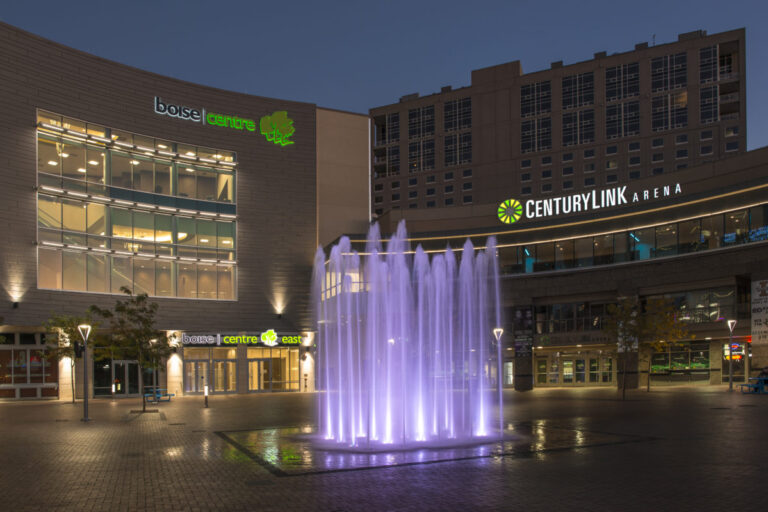
The plaza eventually became the center of a larger mixed-use district that included the convention center, hotels, offices, housing and an arena.
That willingness to invest before the private market was ready became a recurring theme in Boise’s redevelopment story.
Why CCDC Is Separate From the City
Armbruster also explains one of the most misunderstood features of urban renewal agencies.
CCDC is not simply another department of the City of Boise.
A 1976 Idaho Supreme Court case established that an urban renewal agency is legally separate and distinct from the city that created it.
That independence gives CCDC certain powers relating to property acquisition, property disposition and financing.
At the same time, Armbruster emphasizes that the City of Boise still controls land-use approvals. Developers working with CCDC must still obtain demolition permits, building permits, zoning approvals and other city authorizations.
That distinction provides both independence and accountability.
Expertise on the Board Matters
Brunelle and Armbruster discuss another important feature of the agency: its appointed board.
Rather than functioning solely as an extension of the City Council, CCDC historically has included commissioners with expertise in areas such as development, architecture, finance and public policy.
Armbruster credits that professional diversity with helping the agency make stronger decisions.
He points to people such as developer Pete O’Neill, whose private-sector experience helped guide the agency through some of its early redevelopment efforts.
Private Developers Took Risks Too
Armbruster is careful to emphasize that CCDC did not transform downtown alone.
Private developers also took substantial risks at a time when downtown investment was far from guaranteed.
The Oppenheimer family, for example, invested in major downtown office projects during an era when many investors were looking elsewhere.
Armbruster notes how dramatically Boise has changed since then. In earlier years, he recalls trying to meet visitors for coffee downtown and finding almost nowhere to go.
Today, he jokes, it is difficult to walk a block without finding coffee.
Building the Convention Center
Another major partnership involved the Boise Auditorium District and the convention center.
The site had been identified through the downtown planning process, and CCDC owned the property.
The agency conveyed the land to the Auditorium District for essentially a nominal amount, helping make the convention center possible.
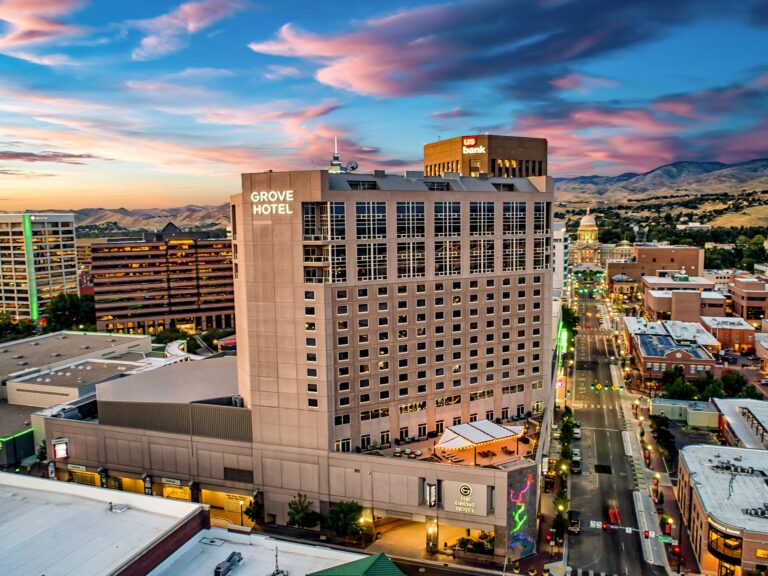
The convention center, Grove Plaza, Grove Hotel and arena eventually reinforced one another and created one of downtown Boise’s most important activity centers.
Later, CCDC also helped finance expansion of the convention center and associated infrastructure.
The Ada County Courthouse and River Myrtle
Armbruster identifies the Ada County Courthouse area as one of the defining projects of the River Myrtle District.
The county needed a new courthouse complex, but the project required substantial infrastructure and parking investments.
The River Myrtle urban renewal plan created a financing mechanism that helped make the development possible.
The project also faced litigation challenging CCDC’s use of funds. Because local district judges had a potential interest in the future courthouse, a judge from Pocatello was brought in to hear the case.
CCDC and Ada County prevailed.
The courthouse project subsequently helped stimulate additional development nearby, including housing, parking garages and the Idaho Water Center.
Old Boise Asks to Join
Perhaps one of the most telling changes in public perception came in Old Boise.
Earlier generations of the Carley family had been among those skeptical of downtown redevelopment efforts.
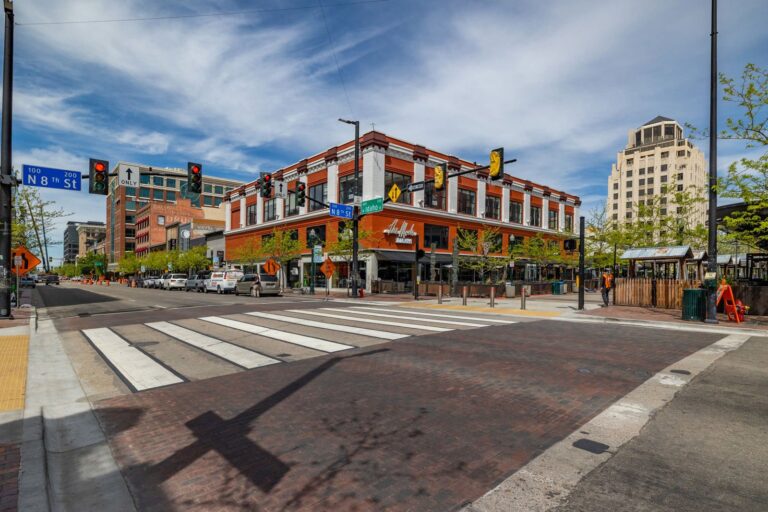
But as the new urban renewal model began proving itself, Old Boise property owners — including Clay Carley and others — supported joining the River Myrtle District.
The reason was practical: they believed urban renewal could help Old Boise remain a viable retail, commercial and mixed-use neighborhood.
The result today is a neighborhood Brunelle describes as a successful blend of old and new.
A Vision That Took 30 Years to Materialize
Armbruster says one of the most remarkable experiences is looking back at River Myrtle planning documents from the 1990s.
Those plans anticipated housing and mixed-use development stretching along Myrtle Street from Broadway toward downtown.
At the time, the idea seemed almost unrealistic.
Today, much of it exists.
Apartments, mixed-use buildings, Trader Joe’s, Whole Foods, the courthouse, BoDo and other developments gradually filled in the district.
“It’s there now,” Armbruster tells Brunelle.
It took decades, but the vision eventually became reality.
Thinking Big — and Being Patient
That realization becomes one of the strongest themes of the interview.
Urban renewal is fundamentally long-term work.
Planning documents may describe places that will not exist for 10, 20 or even 30 years. Projects often require multiple administrations, boards, executive directors and economic cycles before the original vision becomes recognizable on the ground.
Brunelle summarizes the lesson as thinking big and believing that ambitious ideas eventually can happen.
Leadership and Continuity
Armbruster’s career also gave him the opportunity to work with nearly every major CCDC executive director.
He recalls leaders including Harlan Mann, Bob Loughrey, Rick Greenfield, Phil Kushlan and Brunelle himself.
Each brought a different style, but Armbruster believes continuity of leadership was critical.
Long tenures allowed executive directors to understand the agency, build relationships and remain involved long enough to see complicated projects through multiple stages.
Brunelle notes that a similar continuity existed among Boise mayors.
Over roughly four decades, only a handful of mayors — Dirk Kempthorne, Brent Coles, Dave Bieter and Lauren McLean — led the city through much of the period covered in the interview.
That continuity helped sustain a long-term redevelopment vision that otherwise could easily have changed every election cycle.
Nearly 50 Years of Institutional Memory
For Brunelle, the value of interviewing Armbruster goes beyond any individual project.
Armbruster represents nearly half a century of institutional memory.
He was present when downtown redevelopment relied on federal grants. He was there when the mall concept failed. He helped establish tax increment financing. He defended the tool legally and politically. He worked on the creation of River Myrtle and other districts. He advised boards, executive directors and public partners as projects moved from ideas to reality.
Few people have witnessed as much of Boise’s urban renewal story firsthand.
The CCDC Effect
The conversation between Brunelle and Armbruster reveals that the transformation of downtown Boise was not the result of one dramatic project.
It was the accumulation of legal decisions, financial innovations, political persistence, thoughtful planning, public investment and private risk-taking over decades.
The failure of the downtown mall created an opportunity for a different vision.
Tax increment financing created a way to pay for that vision.
The Grove Plaza demonstrated the value of investing ahead of the market.
Parking garages helped unlock private development.
The convention center created an economic destination.
River Myrtle extended redevelopment beyond the original eight blocks.
Old Boise demonstrated that property owners who once questioned urban renewal could ultimately become some of its strongest supporters.
And long-term planning anticipated a downtown residential and mixed-use environment that once seemed improbable but today feels natural.
As Armbruster reflects near the end of the conversation, it is difficult to compress almost 50 years of history into a single interview.
But one lesson emerges clearly: Downtown Boise did not simply happen.
It required people willing to think decades ahead, defend new ideas, take calculated risks and remain committed long enough to see those ideas become real.
That may be one of the clearest expressions of The CCDC Effect: creating the legal, financial and physical framework that allows a community’s long-term vision to become a city people can actually see, use and experience.