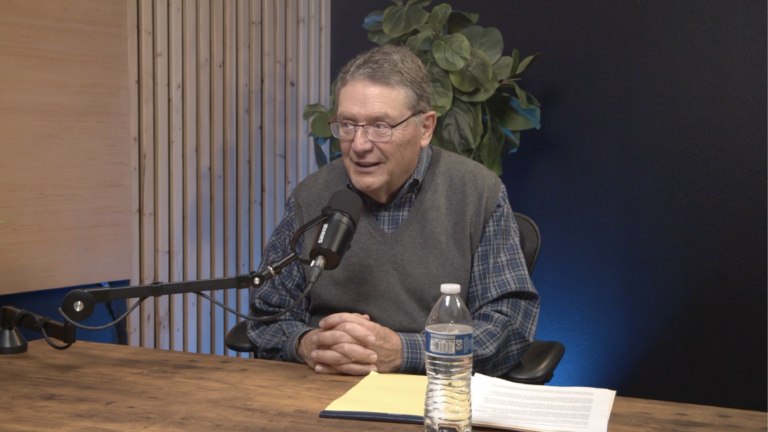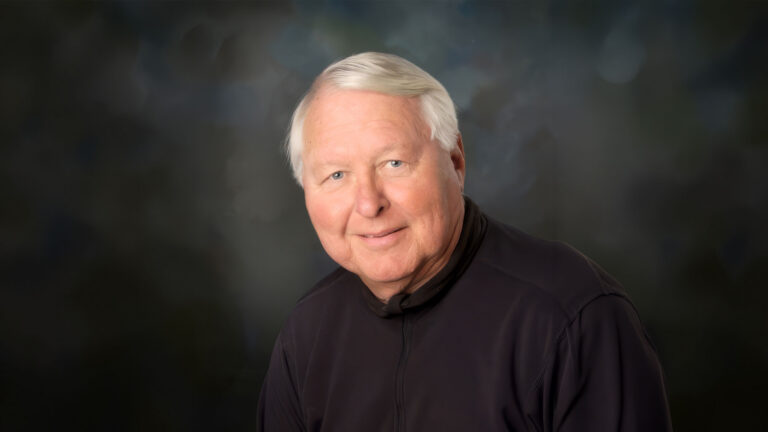
The CCDC Effect: John Brunelle Interviews Clay Carley
Leaving Downtown Boise Better Than He Found It: Clay Carley on Preservation, Development, Partnership and Thinking 50 Years Ahead
In Episode 3 of The CCDC Effect, Capital City Development Corporation Executive Director John Brunelle sits down with longtime downtown Boise developer Clay Carley for a wide-ranging conversation about historic preservation, housing, parking, public spaces, urban renewal and the partnerships that helped transform Old Boise and the east side of downtown.
Carley’s connection to Boise stretches back generations. A fifth-generation Idahoan, he tells Brunelle that his great-great-grandfather helped pioneer Boise’s geothermal system, while his mother became deeply involved in downtown development and historic preservation beginning in the 1970s.
From her, Carley inherited a simple philosophy that has guided his approach to development:
“Wherever you go, leave it better than you found it.”
That idea runs throughout the interview — from restoring century-old buildings to replacing surface parking lots with housing, creating public spaces, investing in art and finding ways for private development and public investment to work together.
Coming Home to Boise
Carley was born and raised in Boise but pursued careers elsewhere, including international trade in New York and automotive equipment manufacturing.
He returned to Boise with his family in 2000 and began working with his mother.
Initially, property management did not sound particularly exciting. That changed quickly.
Carley began looking at downtown Boise’s aging buildings and numerous surface parking lots not simply as properties to manage, but as opportunities.
He began asking what those properties could become — and, more importantly, what future generations might think about the choices he made.
Carley tells Brunelle that he wants his great-great-grandchildren to someday look at something he created with the same pride he feels when looking at what his own ancestors contributed to Boise.
The Carley Family and Old Boise
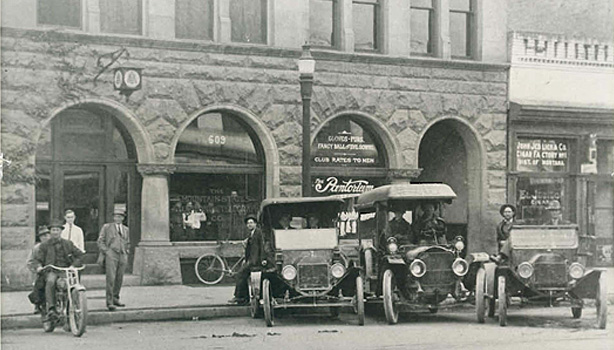
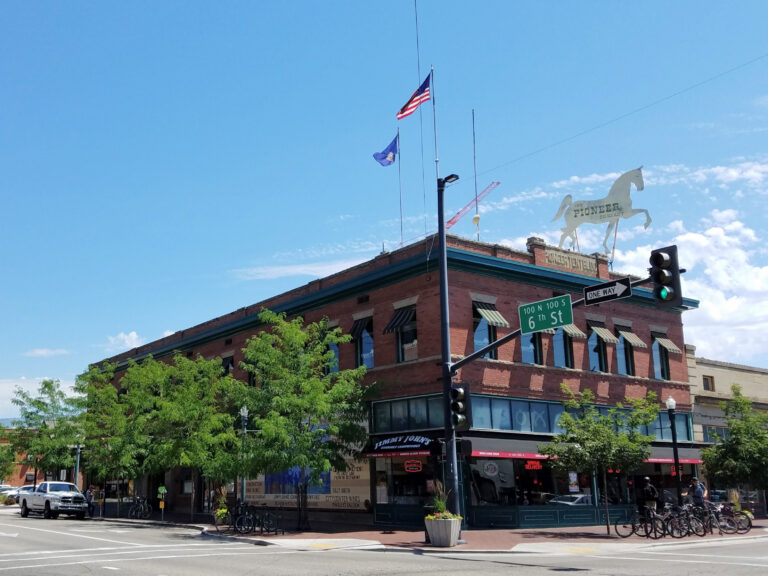
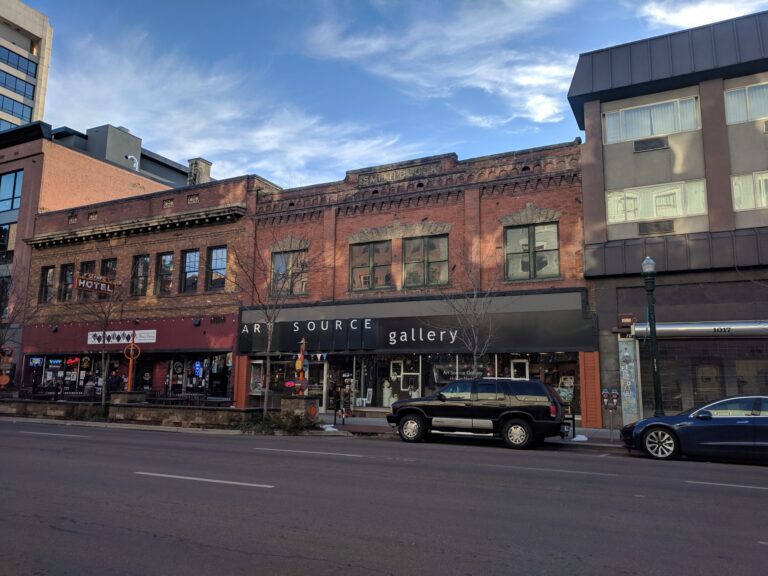
Carley’s mother began investing in Old Boise in 1974 when she acquired the Pioneer Tent Building near Sixth and Main.
At the time, the surrounding neighborhood had experienced substantial disinvestment, with surface parking lots, bars and limited investment in historic buildings.
Rather than restore one building in isolation, she began assembling additional properties with the idea of strengthening the neighborhood as a whole.
That approach ultimately helped preserve an important collection of historic downtown buildings while creating the foundation for what would become one of Boise’s most distinctive entertainment, restaurant and retail areas.
Today, Carley describes the neighborhood as a diverse mix of small offices, retail businesses, restaurants, bars and social activity — particularly around Sixth and Main.
The Challenge of Preserving Historic Buildings
Carley makes clear that historic preservation is rarely easy or inexpensive.
Older buildings come with aging mechanical systems, outdated infrastructure and decades of modifications that must be understood before they can be repaired.
One project proved particularly challenging when Carley discovered extensive asbestos throughout the building. An initial remediation estimate of roughly $400,000 to $800,000 ultimately grew to several times that amount.
The experience illustrates one of the central realities of historic preservation: saving an old building often requires far more investment, patience and creativity than people see from the sidewalk.
Geothermal Heat Meets Modern Preservation
One of Carley’s most innovative projects involved taking advantage of Boise’s historic geothermal system.
During the renovation of one of his older buildings, Carley retained geothermal heating inside but also extended the system beneath the surrounding sidewalks to melt snow and ice.
The idea initially drew skepticism.
Then, during a Boise snowfall, Mayor Dave Bieter called Carley after noticing snow throughout downtown — except around Carley’s building.
The project became an example of combining Boise’s historic infrastructure with a practical modern application.
Carley and Brunelle also discuss CCDC’s role in helping restore the building’s exterior through a façade easement. The work included new windows, painting, masonry improvements and restoration of architectural features that had disappeared over the years.
Federal historic tax credits provided another important piece of the financing.
For Carley, these tools help make preservation financially possible when the cost of renovating an old building might otherwise overwhelm the economics of the project.
Preservation as an Economic Development Tool
The conversation expands beyond Boise as Carley discusses the importance of historic buildings in smaller Idaho communities.
In many rural downtowns, century-old buildings are among the community’s most important assets.
But maintaining them is expensive.
Carley argues that combining federal historic tax credits with a potential state-level incentive could make preservation viable for smaller projects throughout Idaho.
The larger point is one Brunelle and Carley return to repeatedly: preservation isn’t simply about nostalgia. Historic buildings contribute to the identity, character and economic vitality of downtowns.
The Basque Block and the Power of Placemaking
The conversation then turns to one of downtown Boise’s signature public spaces: the Basque Block.
Carley recalls the complicated effort to create a pedestrian-oriented festival street, including disagreements over the curbless design.
The objective was to make the street itself part of the public gathering space rather than create a traditional separation between sidewalk and roadway.
The result speaks for itself.
Carley calls the Basque Block “the most popular place in downtown Boise.”
Together with Grove Plaza, it demonstrates how investments in streets and public spaces can create destinations that become much more than infrastructure.
Extending the Energy of Grove Street
Brunelle and Carley discuss how that placemaking philosophy has continued eastward along Grove Street.
CCDC’s improvements to Grove Street, the pathway toward Broadway, public spaces and private development have begun connecting areas that once felt separate.
Carley sees enormous additional potential.
He points to public spaces at both ends of the corridor and redevelopment opportunities near the courthouse as pieces of a larger urban environment that can continue evolving.
His approach is not simply to evaluate individual parcels. It is to think about how buildings, sidewalks, parks, transportation, housing, businesses and public spaces work together as a neighborhood.
Solving the Parking Problem to Unlock Development
One of the biggest obstacles to Carley’s development plans was parking.
Carley wanted to replace a surface parking lot with downtown housing, but doing so meant losing more than 100 existing parking spaces while simultaneously creating new demand from residents.
Building a large parking structure directly beneath the housing would have consumed much of the allowable building height and produced a project dominated by parking.
Carley wanted something better.
The solution involved acquiring a remnant parcel from CCDC and developing a larger parking garage on the edge of the neighborhood.
Rather than expose the garage as the dominant feature along Front Street, the development wrapped much of it with a hotel.
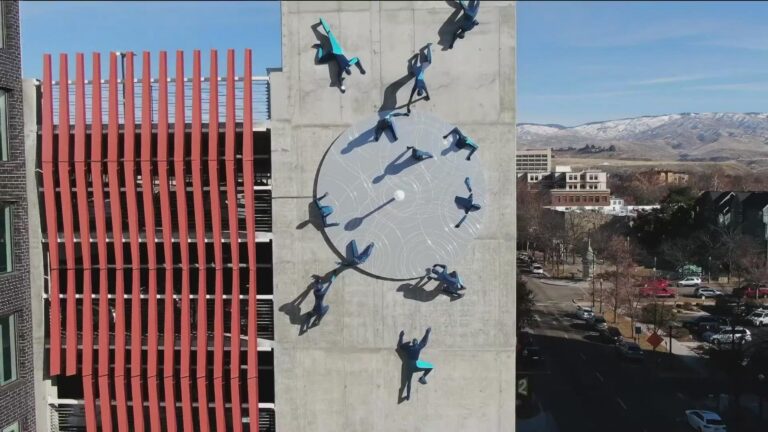
Public art was incorporated into another visible portion of the structure, creating the distinctive blue figures that now climb the garage façade.
The result demonstrates a recurring theme of the interview: infrastructure is necessary, but it doesn’t have to be ordinary.
The Parking Garage Meets COVID
The timing of the parking garage nearly became disastrous.
One month before opening, Carley says approximately 500 monthly parkers had signed up.
Then COVID shut down downtown.
Within a month, that number dropped to about 50.
The project still had substantial debt payments, but suddenly almost no customers.
Brunelle notes that CCDC experienced the same dramatic collapse in parking demand within its public parking system.
Both eventually recovered, and today Carley’s garage is fully subscribed with a waiting list — so much so that Carley now wishes he had built more spaces.
Housing as an Essential Part of Downtown
For Carley, successful downtowns need people who actually live there.
He tells Brunelle that housing makes downtown feel permanent and gives residents a sense of ownership that can’t be created when the district is occupied primarily by daytime workers and visitors.
But Carley’s vision extends beyond simply adding apartments.
He emphasizes diversity — of income, age and use.
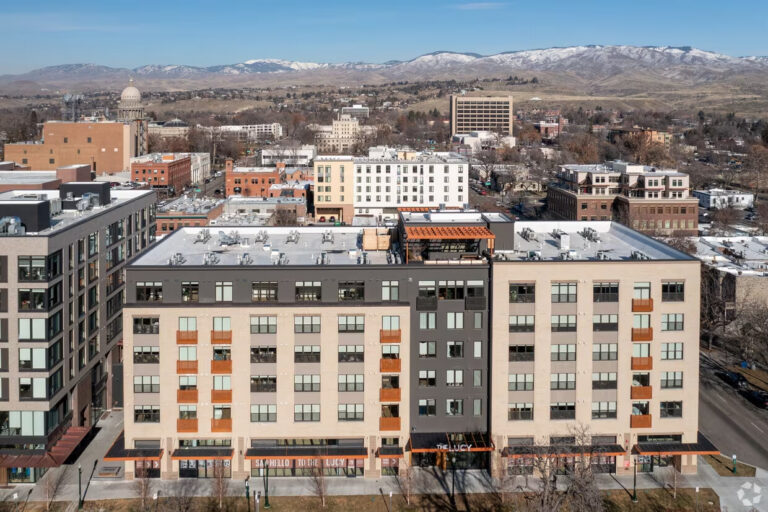
That philosophy led to the Thomas Logan, which includes income-restricted housing supported through federal tax credits and assistance from the City of Boise and CCDC.
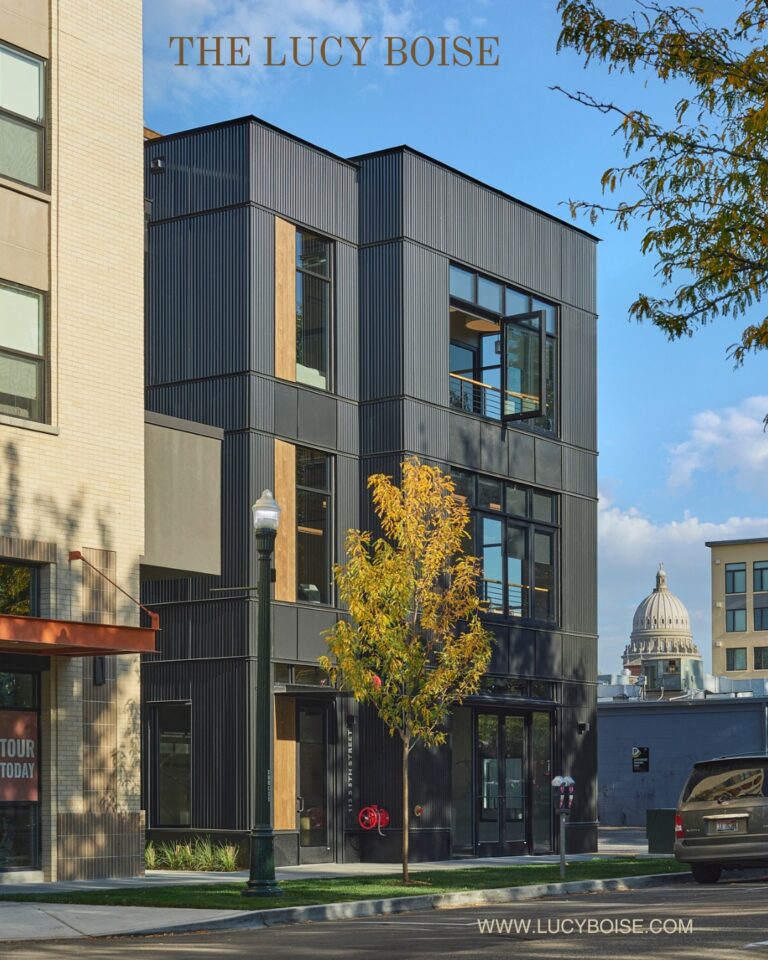
Next door, the Lucy provides market-rate housing.
Instead of creating one massive structure across the block, Carley deliberately separated the development into two buildings with a plaza between them.
The decision cost more but created a more pedestrian-friendly environment and broke down the scale of the development.
Again, Carley returns to the long view: will future generations think the extra effort was worthwhile?
Master Planning Instead of Building One Project at a Time
Early in his return to Boise, Carley realized he didn’t want to simply wait for developers or tenants to propose individual projects.
He hired a Seattle firm to study the broader east side of downtown and develop a master plan.
The exercise helped him think systematically about where housing, hotels, parking, retail and other uses belonged.
That approach ultimately produced a multi-phase development strategy.
Rather than viewing each property independently, Carley began viewing the neighborhood as an interconnected urban system.
Brunelle describes that kind of visioning as crucial to successful downtown development.
Creating Public Space Along Grove Street
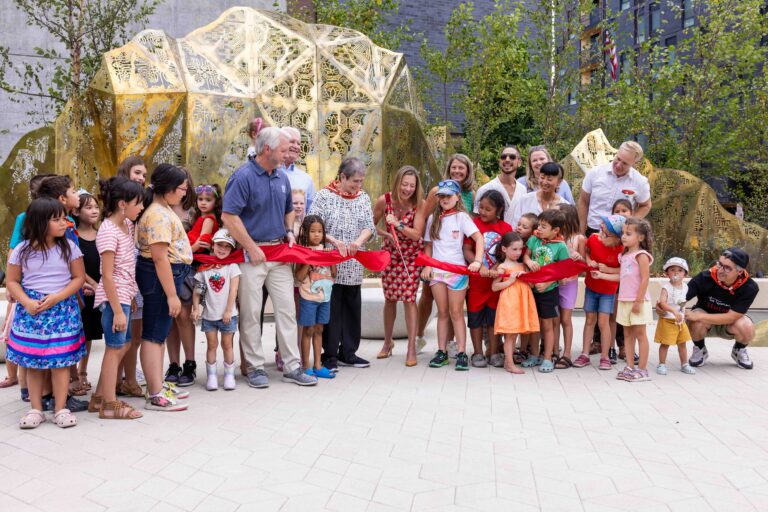
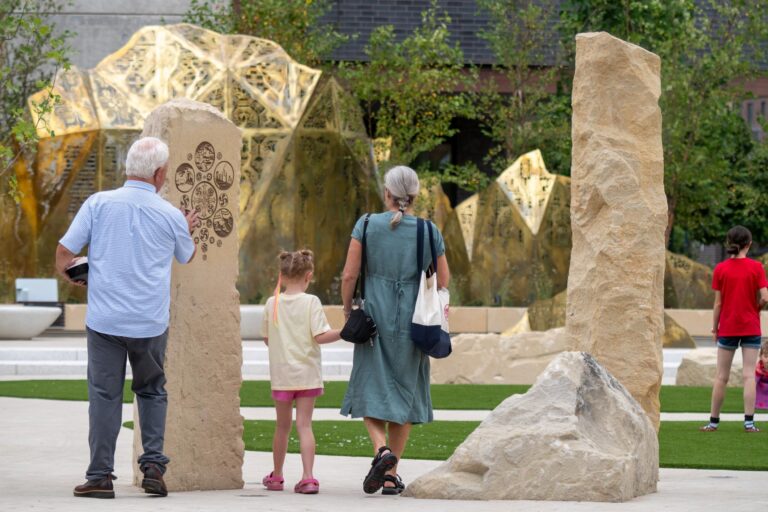
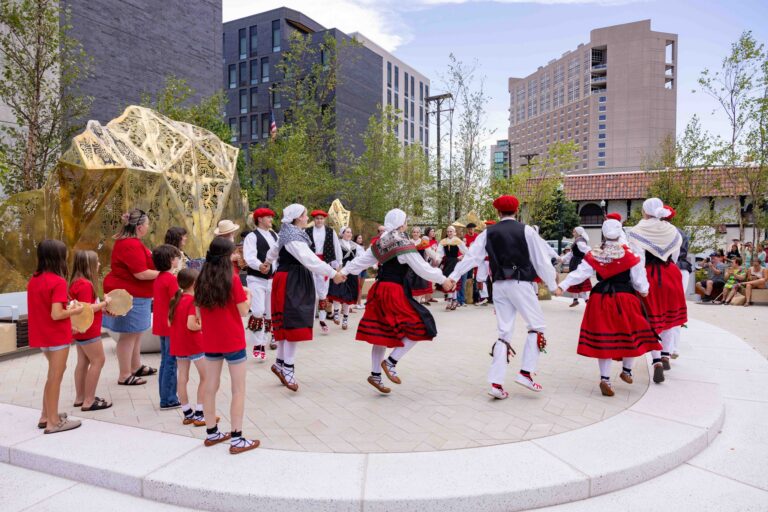
Carley also recounts the story behind the property at Sixth and Grove that eventually became a public space honoring Boise’s Basque community.
Carley had known the property’s longtime owner and had discussed its future with him. Rather than see the property remain surface parking, Carley envisioned it as an extension of the Basque Block and Grove Street’s public realm.
He later shared the idea with Mayor Lauren McLean.
Eventually, CCDC acquired the property and moved forward with creating the park.
For Carley, it represented another opportunity to extend the energy of the Basque Block eastward and create a place where people could gather outside of sidewalks, streets and private businesses.
Urban Renewal: From Skepticism to Advocacy
One of the most revealing portions of the interview involves Carley’s changing understanding of urban renewal.
When he returned to Boise in 2000, he knew little about tax increment financing.
After meeting with CCDC leadership, he explained the concept to his mother.
She was skeptical, believing redevelopment should be left to the private market.
Carley studied the tool himself and came to the opposite conclusion.
When the River Myrtle District was expanded to include Old Boise, he supported the move.
Looking back, Carley tells Brunelle that the projects he has completed in the district would not have happened without tax increment financing support.
The value wasn’t simply the money.
CCDC brought expertise, credibility, partnership and the ability to reduce enough risk to make difficult projects feasible.
The Long-Term Payoff
Carley frames urban renewal in decades rather than individual budget years.
He cites the enormous growth in taxable value within the River Myrtle-Old Boise area and rejects the idea that the transformation would simply have happened on its own.
His argument is that public investment helped stimulate development that produced dramatically greater economic value.
When an urban renewal district eventually closes, that increased tax base flows back to the regular taxing entities.
For Carley, that is why redevelopment requires long-term thinking.
“If you really love where you live, you think 50 years out.”
Boise’s Greatest Asset: Passion for the Community
One of Carley’s most interesting observations comes from his time as president of the Downtown Boise Association.
He recalls a delegation from Spokane visiting Boise to understand why Boise’s downtown was receiving so much positive attention.
After several days, Carley asked members of the group what they had learned.
Their answer surprised him.
What stood out wasn’t simply Boise’s physical assets. It was how much the people they met cared about their community.
That experience led Carley to conclude that one of Boise’s greatest assets is the passion people have for the place.
But he warns that success can’t be taken for granted.
Transportation, transit, coordinated planning and continued reinvestment remain challenges. Boise must continue improving rather than simply celebrating what has already been accomplished.
The Gibson: Proving People Wanted to Live Downtown
The interview returns to housing with a discussion of The Gibson.
Carley had already tested downtown residential demand by converting former hotel rooms into apartments at another property.
At the time, some people questioned whether anyone actually wanted to live downtown.
The apartments proved otherwise.
That experience gave Carley confidence to pursue The Gibson at Fifth and Idaho.
The project involved partnering with the Gibson family and others to combine properties and create a larger residential development.
Instead of maximizing the building footprint, the team created a public park in front of the project.
The decision reduced the number of apartments and made the economics more difficult, but it opened views along Idaho Street, created a public amenity and improved the overall development.
With CCDC assistance, the park became part of the project and was named for Carley’s mother.
The Gibson subsequently became one of Carley’s most successful downtown residential projects.
Financing Creativity
The Gibson also illustrates how financing decisions affect design.
Carley describes using a federal HUD financing program that provided longer-term amortization and non-recourse financing.
The process was more complicated and expensive upfront than conventional lending, but the structure gave the project greater flexibility.
That flexibility allowed the development team to invest more heavily in design and public amenities instead of simply maximizing the number of rentable units.
Finding Opportunity in Leftover Space
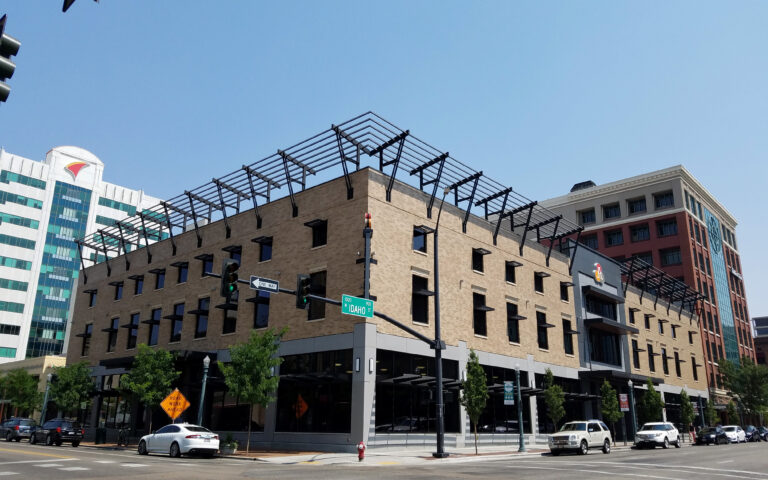
Carley and Brunelle also discuss a small contemporary office building near the Lucy.
The parcel originally seemed too small and awkward for meaningful development, and one suggestion was simply to make it another pocket park.
Carley saw another possibility.
He and his partners developed a three-story office building that contrasts sharply with the surrounding architecture.
A green roof added another design element.
Carley calls it one of his favorite projects — an example of finding opportunity in a piece of property that might otherwise have been dismissed as leftover space.
The Boise Rescue Mission: One More Essential Partner
Near the end of the interview, Carley stops Brunelle before wrapping up because he wants to recognize another critical partner: Bill Roscoe and the Boise Rescue Mission.
The Rescue Mission controlled property Carley needed to assemble the site for the parking garage.
Simply buying the property wasn’t enough. The organization needed somewhere else to serve its community.
A complicated process eventually created an opportunity for the Rescue Mission to relocate.
The transaction cost Carley substantially more than he originally anticipated, and acquisition of a neighboring automotive property added further expense and environmental remediation.
But Carley emphasizes that without the Rescue Mission’s cooperation, the parking garage wouldn’t have happened.
And without the garage, the housing, hotel and other development that followed wouldn’t have happened either.
Brunelle summarizes the story perfectly:
“So many players, so many layers.”
The CCDC Effect
That observation captures the central message of Brunelle’s conversation with Carley.
Downtown redevelopment isn’t the work of a single developer, government agency or visionary.
It happens when property owners, developers, investors, architects, businesses, city leaders, nonprofits and public agencies find ways to solve problems together.
Carley’s story also demonstrates how those partnerships build upon one another.
Historic buildings were preserved instead of demolished.
Geothermal infrastructure was adapted for modern use.
Parking investments unlocked housing and hotel development.
Affordable and market-rate housing brought residents downtown.
Public art transformed necessary infrastructure.
Parks and plazas created places for people rather than simply buildings.
The Basque Block demonstrated the power of placemaking, and that energy is now extending farther along Grove Street.
Urban renewal helped reduce the risk required to make difficult private projects possible.
And private developers like Carley were willing to take the risks necessary to turn public investment and long-range plans into actual buildings and neighborhoods.
Throughout the interview, however, Carley continually returns to something larger than individual projects.
Think long term.
A successful downtown requires decisions made not simply for the next development cycle or the next five years, but for the next generation.
It means preserving what makes a place distinctive while still allowing it to grow.
It means accepting that good design sometimes costs more.
It means investing in public spaces even when they reduce the amount of developable land.
And it means recognizing that today’s difficult redevelopment project can become tomorrow’s beloved neighborhood.
For Carley, the measure of success ultimately comes back to the lesson he inherited from his mother:
Leave it better than you found it.
That philosophy — combined with vision, calculated risk, preservation and sustained public-private partnership — is another powerful example of The CCDC Effect.