Building the Foundation for Modern Downtown Boise: Phil Kushlan Reflects on the Early Years of CCDC
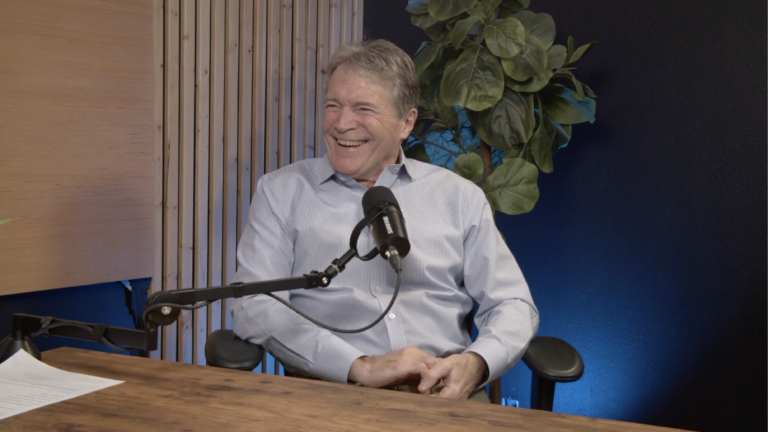
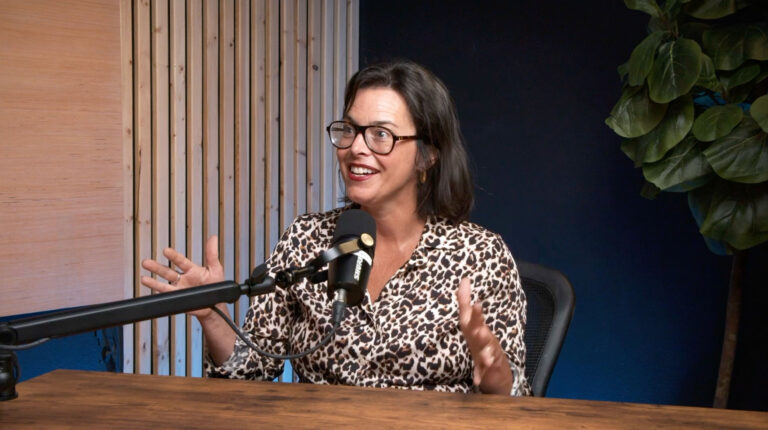
In Episode 7 of The CCDC Effect, Capital City Development Corporation Executive Director John Brunelle sits down with former CCDC Executive Director Phil Kushlan for a look back at a pivotal period in Boise’s redevelopment history — and at the decisions, partnerships and long-term vision that helped create the downtown Boise people experience today.
Kushlan took over CCDC in July 1999 after returning to Idaho from the Seattle area, where he had been working on the new Seahawks stadium. He arrived at an agency facing questions about its future and even whether it should continue to exist. Some city leaders viewed Boise’s earlier urban renewal efforts as unsuccessful and believed the Central District should simply be closed out.
But Kushlan and the CCDC board saw something different: an organization with a powerful redevelopment tool and an opportunity to make a lasting difference.
An Agency Looking for Its Next Chapter
Kushlan paints a vivid picture of CCDC when he arrived. The agency had a staff of about five, limited financial resources and an uncertain standing in the community. He even recalls that one end of the credenza in the executive director’s office was propped up by telephone books — a fitting symbol, he jokes, of an organization that didn’t appear particularly confident about its permanence.
The board that hired him had a different vision. It wanted CCDC to become a functional, respected institution capable of using urban renewal to accomplish meaningful projects.
Kushlan set about strengthening the organization internally, improving its financial position and rebuilding external relationships. One of his guiding principles was simple: find a relatively small project that could be completed quickly and successfully.
That project became the Basque Block.
The Basque Block: A Small Project With a Big Impact
The Basque Block had been discussed for years as a way to recognize Boise’s Basque heritage, but the concept had never fully come together.
Kushlan embraced it as an opportunity to demonstrate what CCDC could accomplish. Landscape architecture firm Jensen Belts completed the design, and Kushlan began assembling the funding needed to make the project real.
CCDC initially committed $100,000. The City of Boise matched that amount, ACHD contributed additional funding, and nearby property owners were asked to help close the remaining gap. Ultimately, the project cost $469,000.
It came in on time and under budget — and became extremely popular.
For Kushlan, its significance went well beyond the physical improvements. It gave CCDC an early, visible success and demonstrated that the agency could bring multiple partners together around a shared vision and deliver results.
Brunelle describes it as something of a “barn raising” — a project assembled on a shoestring through persistence and partnership.
Kushlan also insisted that the partners who helped make it happen be recognized on a brass plaque. Years later, he has seen people whose names appear on that plaque bring their grandchildren to the Basque Block and point out their role in creating it.
The Urban Renewal Dividend
One of the most revealing moments in the interview comes when Kushlan compares CCDC’s finances when he arrived with where they stood when he left in 2011.
In 1999, he says, the agency had an ending cash position of just $21,700. By the time he departed, that figure had grown to approximately $15 million.
Kushlan stresses that the growth wasn’t instantaneous. It came through time, stewardship, the creation of additional districts and successful investment.
He describes the eventual payoff as the “urban renewal dividend.”
That phrase captures one of the central themes of the interview: urban renewal requires patience. A district does not produce transformational results immediately. It requires long-range planning, disciplined investment and the willingness to stay with a vision for years — sometimes decades — before seeing its full impact.
Turning Plans Into Reality
Kushlan also offers a straightforward explanation of why urban renewal can be so important in Idaho.
Communities, he says, often have enough resources to plan but not enough resources to implement those plans. Urban renewal can bridge that gap.
Once communities begin completing successful projects, confidence grows. People begin to believe that the vision can actually become reality. Kushlan says he has seen that principle work in communities across Idaho since leaving CCDC, although different cities use the tool in different ways.
Old Boise Wants In
The changing perception of CCDC became particularly clear in Old Boise.
Kushlan recalls that some property owners there were initially skeptical of CCDC simply because it was a government agency. But relationships developed, particularly with Clay Carley and others in the neighborhood, and attitudes began to change.
Eventually, Old Boise property owners themselves petitioned to become part of the River Myrtle District.
For an agency that only a few years earlier had faced questions about whether it should continue to exist, the significance was difficult to miss: property owners were now actively asking to join the urban renewal effort.
Extending the Vision West
Kushlan and Brunelle also revisit the creation of the Westside District.
As Boise grew and began attracting larger-scale investment, Kushlan saw an opportunity to extend downtown’s redevelopment momentum westward. An area west of the existing district had redevelopment potential but lacked access to the same urban renewal resources.
The answer was to create another district.
The idea, Kushlan explains, was to take the energy already being generated downtown and in Old Boise and “drag the energy to the west as well.”
That decision has had lasting consequences.
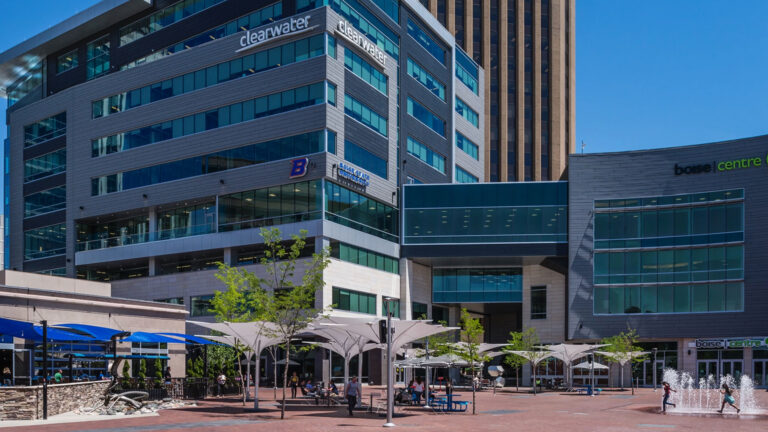
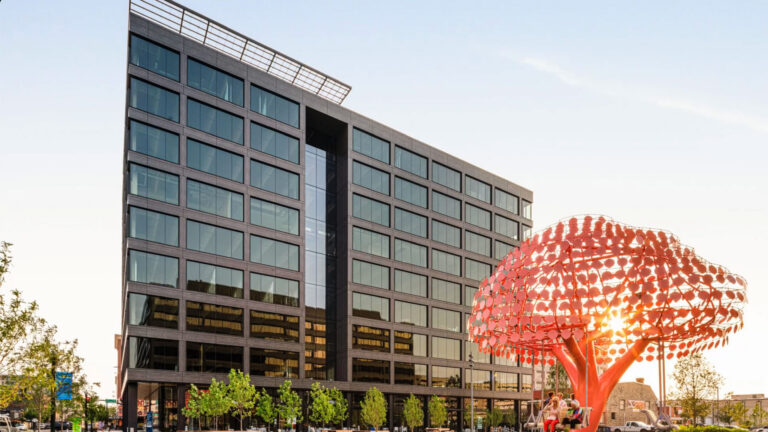
Brunelle notes that today’s Westside includes major investments such as new housing, the new YMCA and CCDC’s mixed-use parking project. The district also allowed CCDC to coordinate improvements across both sides of important downtown corridors.
What began as long-range planning decades ago is now reaching fruition as the district approaches its sunset.
Projects Don’t “Just Happen”
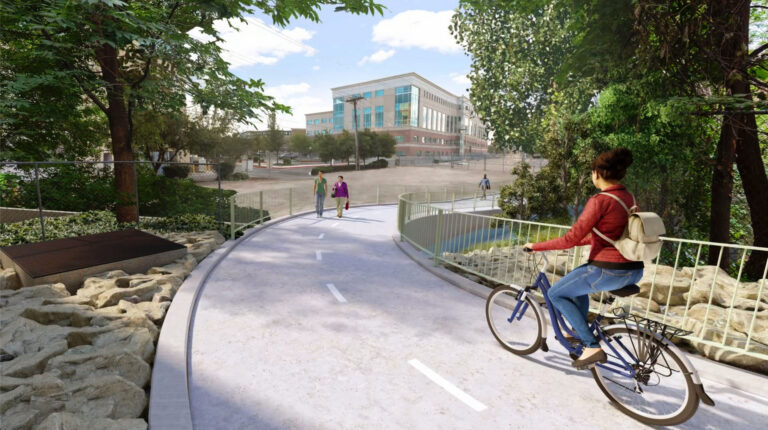
That long time horizon becomes particularly evident when Brunelle discusses the new Grove Street Pathway.
The pathway now creates a significant pedestrian and bicycle connection from the eastern side of downtown toward Grove Street. Kushlan recalls that the concept dates back decades, emerging after another street connection was interrupted by development.
At the time, the pathway was essentially an idea placed on a list for the future.
Decades later, it exists.
The exchange illustrates a recurring lesson in their conversation: successful cities can make completed projects look inevitable, even though years of negotiations, planning, agreements and problem-solving occurred behind the scenes.
As Kushlan notes, getting all the parties to agree can require an entirely different skill set from actually constructing the project.
Building the CCDC Team
Brunelle also credits Kushlan with strengthening CCDC as an organization.
Kushlan identifies longtime CCDC attorney Ryan Armbruster as a critical resource and discusses bringing in people including Pam Sheldon for long-range planning, Max Clark for parking expertise, Mike Hall from the City of Boise and Todd Bunderson from the City of Nampa.
Kushlan also worked to bring CCDC into Idaho’s public retirement system, making it easier to recruit experienced public-sector professionals.
The goal was to increase the organization’s professionalism and build a team capable of executing the agency’s expanding vision.
For Kushlan, that is a fundamental responsibility of an executive director: articulate the vision, give talented people the resources they need, remove obstacles and then get out of their way so they can do good work.
The Courthouse: A “Ph.D.” in Getting Things Done
Asked which projects stand out from his 12-plus years at CCDC, Kushlan immediately points to the Ada County Courthouse project.
When he arrived, the project was tied up in litigation and extraordinarily complicated legal and financial arrangements. The documentation alone, he jokes, could have filled a six-foot-long stack.
But Kushlan had the unusual opportunity to see the project through virtually its entire lifecycle — from a complicated concept through construction and ultimately the early retirement of its debt.
He calls the experience a “Ph.D. in getting something done against all odds.”
Finding Creative Ways Over the Hump
Another project illustrates the flexibility Kushlan believes urban renewal requires.
A private parking structure needed approximately $1 million to make its financial model work. Instead of simply providing a long-term subsidy, CCDC leased 200 parking spaces for five years.
That temporary commitment helped the developer overcome the financial gap, allowed the garage to be built and limited CCDC’s long-term obligation.
Kushlan describes this type of problem-solving as looking at something that appears insurmountable, turning it sideways and finding another way to make it fit.
Build Something That Makes Other Things Happen
Perhaps the clearest expression of Kushlan’s redevelopment philosophy comes when he talks about catalytic investment.
“You can build stuff or you can build stuff that makes other stuff happen,” he tells Brunelle.
He points to The Grove Plaza as an example. At the time, investing $1.2 million in expensive brick paving surrounded by gravel parking lots may have seemed difficult to justify. In hindsight, the plaza became a foundational downtown public space around which enormous private investment occurred.
The lesson is that the value of a public investment cannot always be measured solely by what is built on opening day. Its greater value may be what happens around it years later.
Betting on Downtown Housing
Housing provides another example of planning ahead of the market.
Kushlan recalls a mid-1990s study suggesting downtown Boise needed approximately 1,300 housing units. Critics dismissed the number as national data that didn’t reflect Boise.
A subsequent local market analysis produced an even more surprising conclusion: downtown could support approximately 5,000 units.
At the time, many people simply didn’t believe Boiseans wanted to live downtown.
Eventually, projects began proving otherwise.
The conversation provides an important historical counterpoint to today’s downtown Boise, where residential development is now an established part of the market. What appears obvious today required someone years earlier to study the market, articulate the opportunity and convince others to take the first risk.
Solving the “Hole in the Ground”
Kushlan’s tenure also included one of downtown Boise’s most notorious redevelopment challenges — the long-stalled site at 8th and Main known for years as “the hole in the ground.”
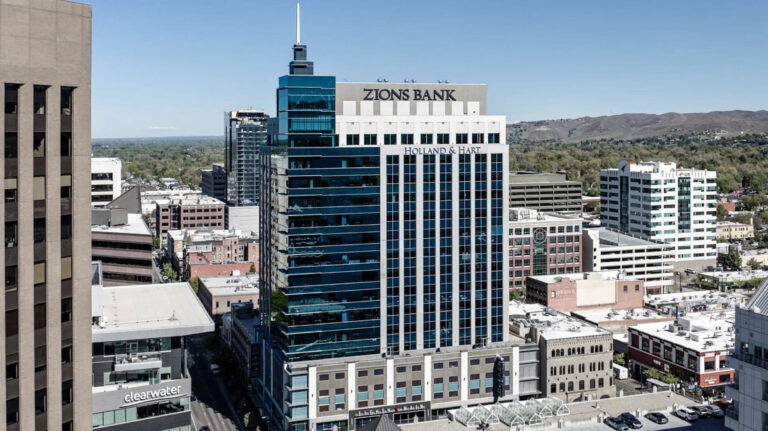
At Kushlan’s final CCDC board meeting in 2011, the agency signed the agreement that transferred the project to Gardner Company. Brunelle credits Kushlan, CCDC, Gardner Company, Zions Bank and other partners with finally solving a problem that had become symbolic of downtown’s struggles.
Brunelle argues that the successful redevelopment helped “relight the fuse” downtown and gave local developers renewed confidence to invest.
BoDo and the Secondary Effects of Investment
Kushlan also recalls receiving a cold call from California developer Mark Rivers regarding Boise investment opportunities.
Rather than dismissing it, Kushlan spent roughly 45 minutes explaining the downtown vision and encouraging Rivers to consider the struggling 8th Street Marketplace.
Rivers eventually came to Boise and helped transform the area into what became BoDo.
But Kushlan believes the project’s greatest effect may have been psychological.
Before BoDo, Front Street seemed like a barrier separating downtown from the River Myrtle area. Once there was a compelling destination on the other side, people had a reason to cross the street. The perceived distance shrank, opening the door to additional development south of Front Street.
It is another example of the secondary effects that catalytic redevelopment can produce — impacts that may not have been fully predictable when the original investment was made.
The CCDC Effect: Vision, Patience and Persistence
Throughout the interview, Brunelle and Kushlan repeatedly return to a simple idea: downtown Boise did not become what it is today by accident.
It took early wins like the Basque Block. It took the patience to establish districts that would not generate significant resources for years. It took recruiting talented staff, earning the confidence of property owners, solving seemingly impossible financial and legal problems and making public investments before their ultimate value was obvious.
It also required being prepared when opportunity appeared.
When Brunelle asks Kushlan how he knew whether that unexpected call from Mark Rivers was legitimate, Kushlan’s answer captures much of his philosophy: you don’t know. You treat opportunities as real until they prove otherwise, and you make sure you have a clearly articulated vision so you’re ready when the right opportunity arrives.
The Boise that resulted — a downtown characterized by walkability, historic buildings alongside modern development, housing, public spaces and strong connections among neighborhoods — is the product of decisions made across decades.
For Kushlan, the formula is ultimately straightforward: big ideas, patience and a well-articulated vision.
For Brunelle, who has spent years carrying many of those earlier plans through to completion, the interview offers an opportunity to connect today’s downtown Boise with the people and decisions that laid its foundation.
And perhaps that is the clearest example of The CCDC Effect: doing the difficult work today that makes something transformative possible tomorrow.