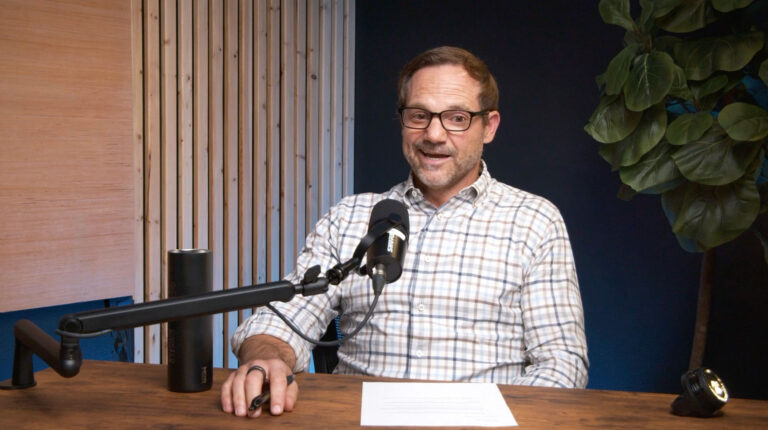
The CCDC Effect: Amy Fimbel
Senior Project Manager of Capital Improvements
In this episode of The CCDC Effect, Executive Director John Brunelle interviewed Amy Fimbel, CCDC Senior Project Manager of Capital Improvements, about her career, the complexity of delivering major public infrastructure projects, and the role urban renewal played in shaping Downtown Boise. Fimbel described her work as overseeing the design and construction of many of the improvements people experienced at street level, including streets, plazas, sidewalks, bicycle facilities, pathways and parks throughout Boise’s urban renewal districts.
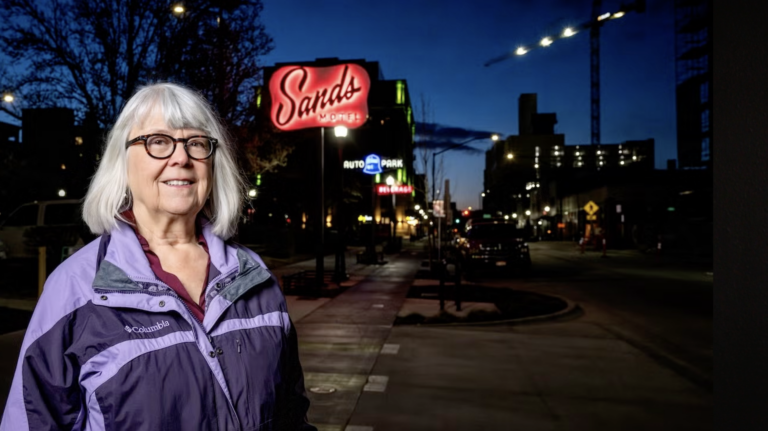
Fimbel’s path to CCDC was anything but conventional. She earned a bachelor’s degree in environmental studies from Elmira College in upstate New York, where she also played college hockey. Her first professional experience involved construction inspection and materials testing. After several years in the industry, she joined Portland’s public transportation agency, TriMet, as an inspector working on the Orange Line light-rail expansion. The large-scale project became an important turning point in her career, exposing her to bridges, retaining walls and other complex infrastructure while giving her experience representing the project owner. She later moved into project management and managed increasingly complex transit projects.
After visiting Boise in 2019 and deciding it offered the kind of community her family was looking for, Fimbel began searching for opportunities in the area. A CCDC project manager position became available, she applied, and, as Brunelle observed during the interview, “the rest is history.”
Fimbel explained that there is rarely a typical day at CCDC. Projects move through planning, design and construction, requiring different skills at every stage. On an active construction project, her work could include reviewing contractor submittals, requests for information, change orders and schedules while responding to issues arising in the field. Earlier-stage projects required research, design review and extensive stakeholder engagement. Fimbel emphasized that communicating with businesses, property owners and residents before construction began was essential to helping people understand both temporary disruptions and the long-term purpose of CCDC’s work.
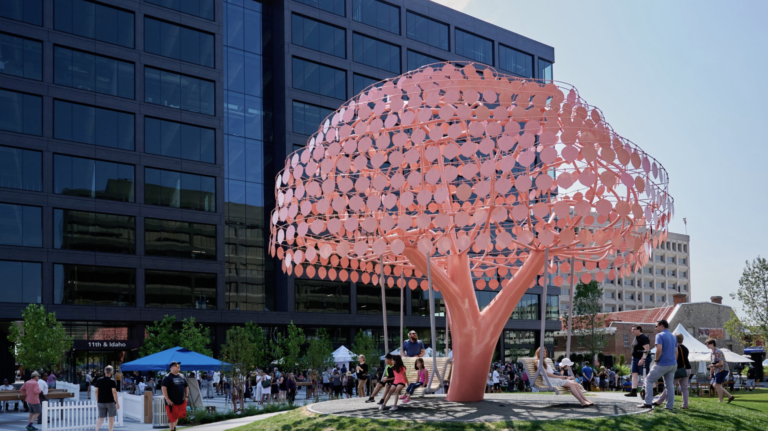
Among her most meaningful projects was Cherie Buckner-Webb Park, which was known as the Westside Urban Park when she joined CCDC. Years of work by the Agency had already established the development and partnership agreements necessary to make the project possible. Fimbel helped carry that work forward, transforming a surface parking lot into a community gathering place for a growing downtown residential neighborhood. The park created opportunities for residents, families and downtown employees to gather, relax and enjoy outdoor space.
One of the park’s signature features was Matthew Mazzotta’s “Gentle Breeze,” the distinctive pink tree and swings. Fimbel explained that positioning the artwork on an elevated berm created significant design challenges because the installation also needed to be accessible. The team incorporated an ADA-accessible ramp and designed the swings so people with disabilities could experience the artwork. The result was a project that combined public art, placemaking and accessibility.
Fimbel also highlighted Rebuild 11th Street, a nine-block reconstruction extending from River Street to State Street. CCDC worked with the Ada County Highway District to rebuild the roadway and streetscape while creating Downtown Boise’s first all-ages, all-abilities raised protected bicycle lane. Significant infrastructure work also occurred below the surface, including undergrounding overhead power on several blocks and replacing an underground canal crossing that continued carrying irrigation water to other parts of Boise.
The design intentionally created a more comfortable environment for multiple forms of transportation. Fimbel explained that narrower vehicle lanes helped slow traffic, improving conditions for pedestrians and cyclists as well as motorists. The project ultimately strengthened an important north-south connection through downtown, with the longer-term vision of extending the route to the Boise River Greenbelt.
Fimbel described Rebuild Linen Blocks on Grove Street as another career highlight. The seven-block project between 9th and 16th streets transformed Grove Street from what she described as a “pass-through corridor” into a destination. Improvements included wider sidewalks, protected bicycle facilities, extensive landscaping and integrated public art. According to Fimbel, the public improvements coincided with and helped catalyze approximately $300 million in private investment, three new hotels and 300 new homes.
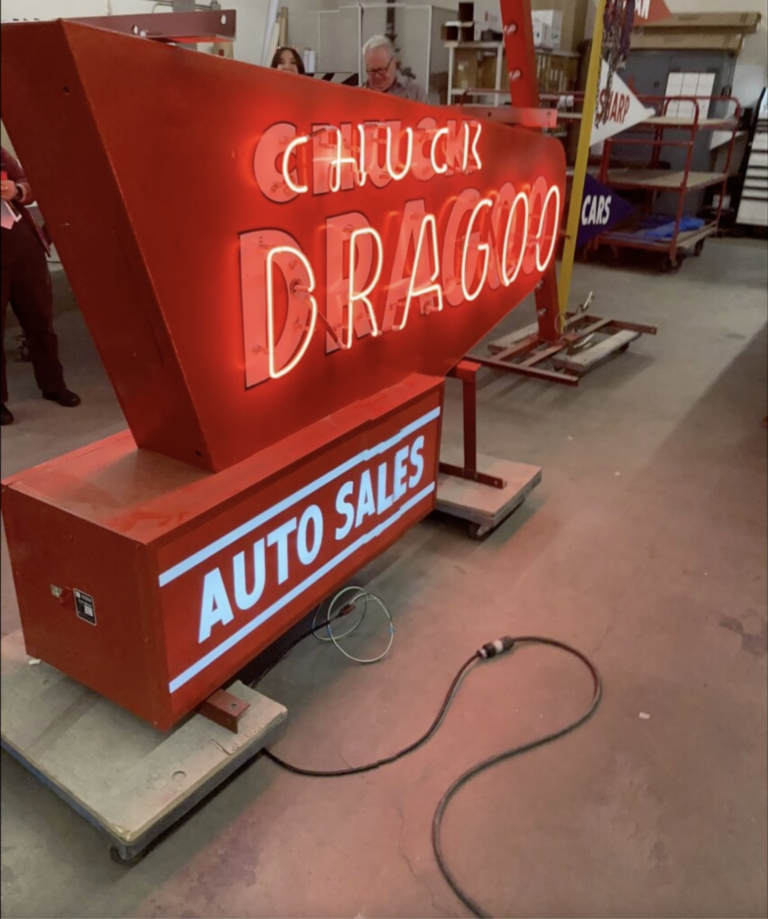
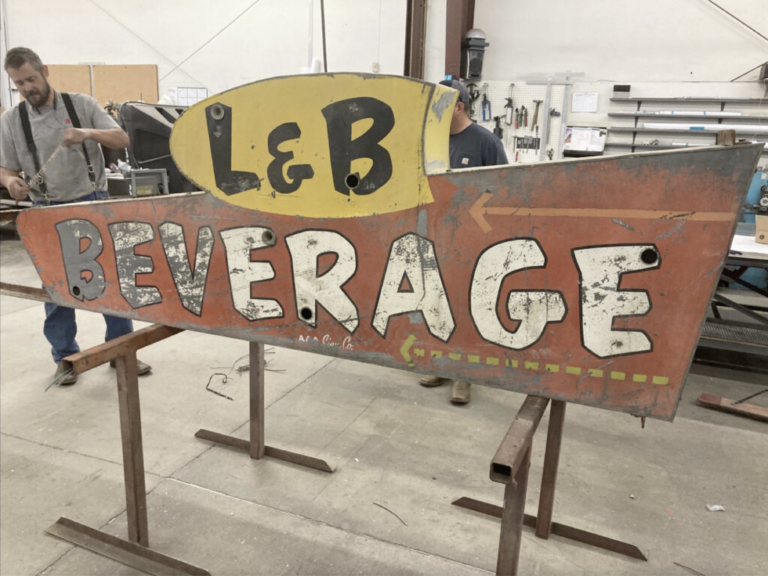
A defining feature of that transformation was Neon Grove, an outdoor collection of six restored historic Boise neon signs. Fimbel credited Vangie Osborn and a team that included Rocket Neon, YESCO and Classic Design Studios with restoring the signs, including new neon, repaired sign bodies, hand lettering and historically researched paint colors. The installation created another downtown landmark while preserving pieces of Boise’s visual history.
Throughout the conversation, Fimbel stressed that CCDC’s accomplishments depended on partnerships. The Agency coordinated extensively with ACHD, Boise Public Works, geothermal staff, Veolia, Idaho Power and telecommunications companies, often combining multiple infrastructure improvements into a single construction project. That coordination reduced future disruption while allowing participating agencies to accomplish more collectively than they might independently.
Ultimately, Fimbel described urban renewal as a tool that provided the critical infrastructure necessary to lay the foundation for private investment and long-term community growth. Her work offered tangible examples of that philosophy: replacing surface parking with community space, rebuilding streets for multiple transportation modes, preserving historic landmarks and coordinating public investments that helped unlock significant private development. The interview illustrated how CCDC’s work below the street and behind the scenes ultimately became the parks, streets, pathways, public art and neighborhoods that Boise residents experienced every day.