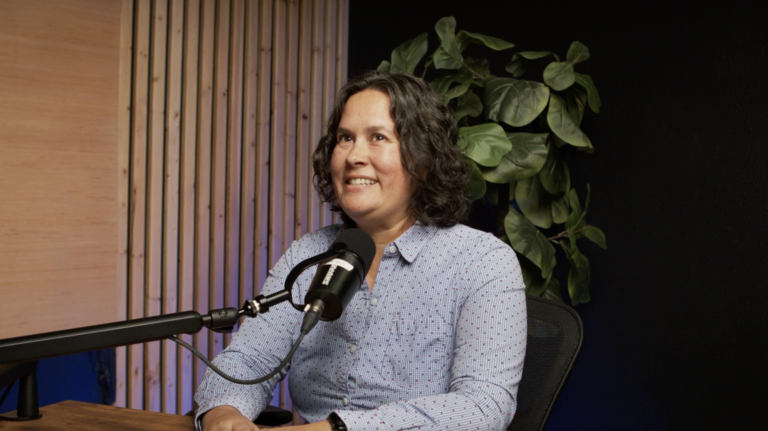
The CCDC Effect: Alexandra Monjar on Building Better Places Through Urban Renewal
Alexandra Monjar’s path to Capital City Development Corporation was anything but conventional. In Episode 11 of The CCDC Effect, Monjar joined John Brunelle to discuss how an early interest in arts, neighborhoods and urban design eventually led to a career helping shape Boise’s built environment—and to some of CCDC’s most ambitious recent projects.
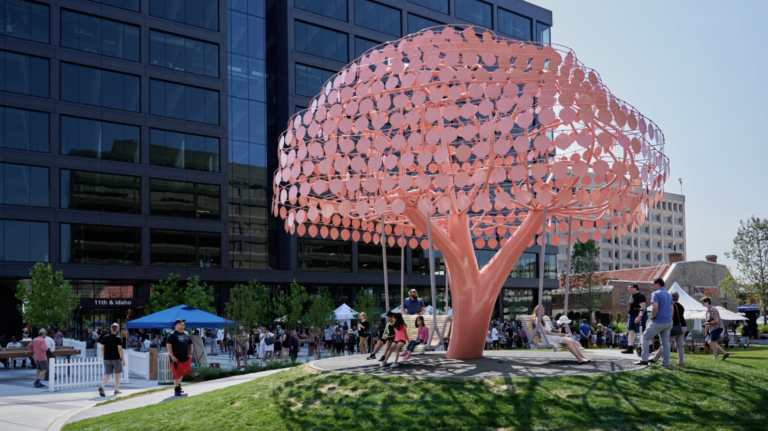
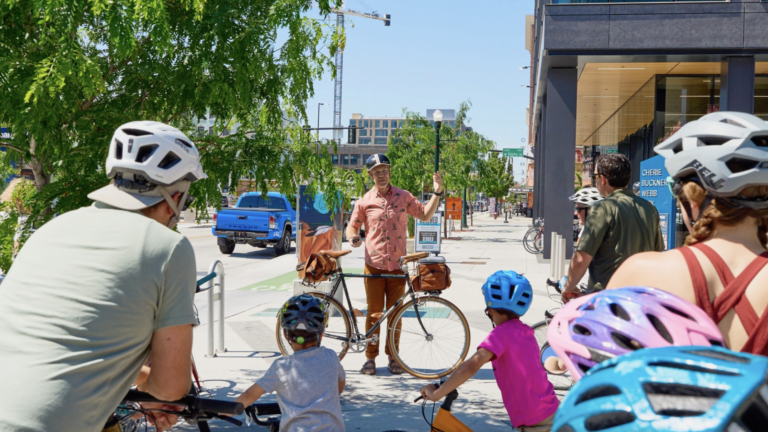
Monjar joined CCDC in December 2020 after managing the Idaho District Council of the Urban Land Institute. Earlier, she had been involved with Idaho Smart Growth and worked in arts administration, including positions with the Utah Museum of Fine Arts and Salt Lake County’s Zoos, Arts and Parks program. Her interest in cities grew from observing how land use, public spaces and neighborhoods affect people’s everyday experiences.
That interest deepened after moving to Boise in 2014. Through Idaho Smart Growth and other planning initiatives, Monjar began studying what makes successful cities work. She became particularly interested in streets—not simply as transportation corridors, but as some of a city’s most important public spaces. Her involvement in Boise’s National Street Service project helped her recognize that many of the downtown streets and places she most appreciated had been influenced by CCDC investments.
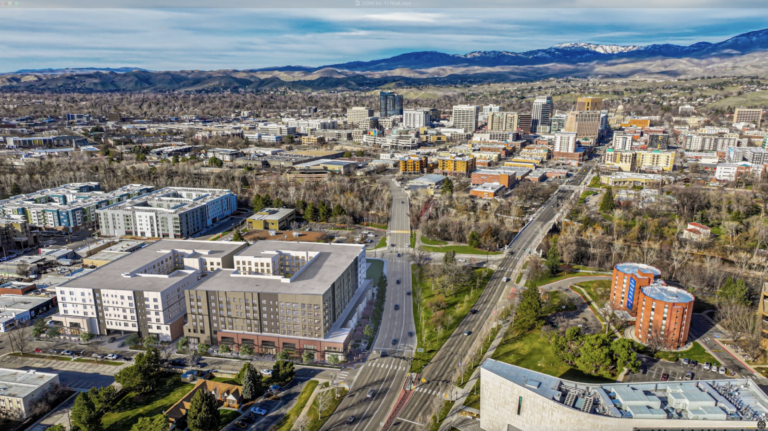
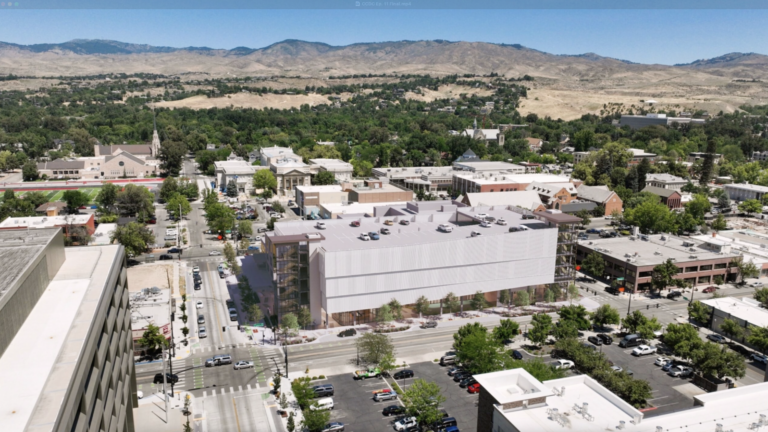
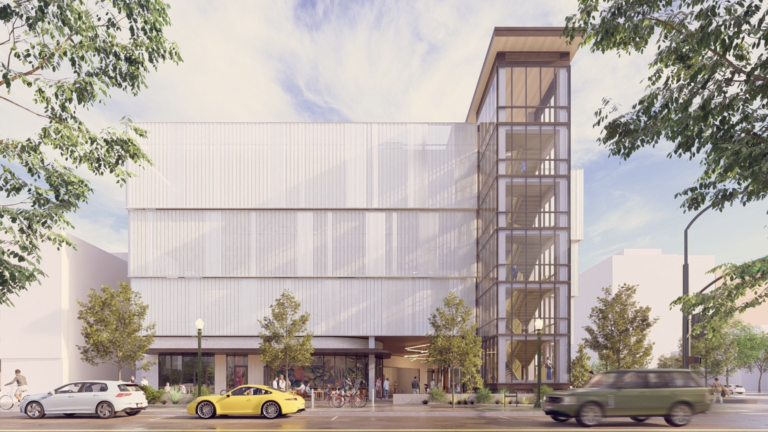
One project dominates the discussion of Monjar’s recent work: 1010 Jefferson in the Westside District.
Monjar described the project as both a personal stretch and a significant undertaking for CCDC. The project is designed to provide public parking near the edge of downtown’s walkable core while supporting the continued redevelopment of surface parking lots into more productive uses. Its location near State Street also creates an opportunity for people arriving downtown by automobile to transition to walking or bicycling.
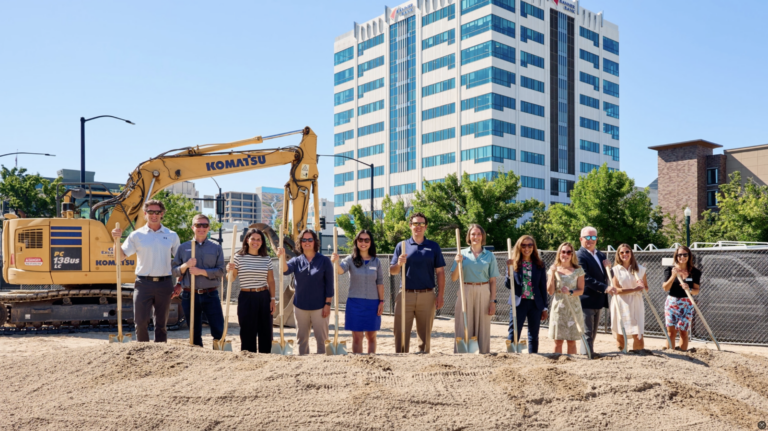
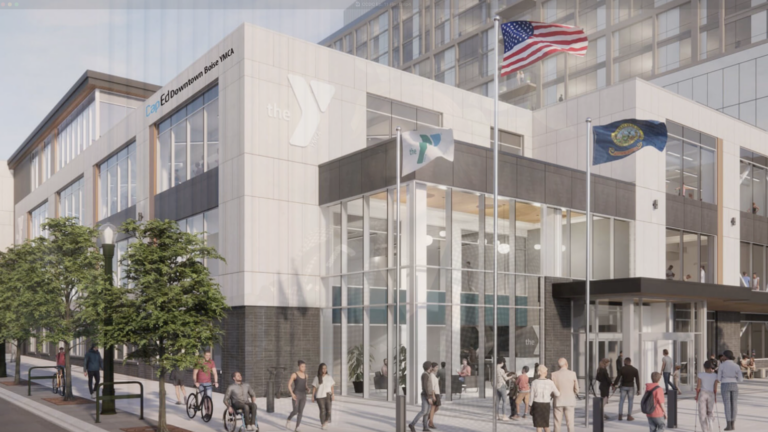
But 1010 Jefferson was intentionally designed to be more than a parking garage. Its ground floor will contain five commercial spaces as well as the Kissler Family Early Education Center operated by the YMCA. Along 11th Street, a public plaza will complement investments in the 11th Street bikeway and connect with nearby Cherie Buckner-Webb Park. Trees, awnings, bicycle parking, generous pedestrian areas and active ground-floor uses are intended to make the building contribute to the surrounding neighborhood.
The interview also explores Monjar’s broader responsibility for CCDC’s Participation Program, the policy guiding many of the agency’s public-private partnerships. Monjar works with developers constructing projects within CCDC districts, reimbursing eligible public improvements and participating in projects involving agency property acquisition and disposition.
Affordable housing has become an increasingly important component of that work.
Monjar discussed changes CCDC made to its Participation Program to better accommodate affordable housing projects. Traditional participation is often tied to the property-tax increment generated by new development. Because rent-restricted housing can produce lower assessed values, that structure can limit the amount of assistance available. CCDC modified its approach to provide greater flexibility for qualifying affordable housing developments, potentially supplementing project-generated increment with other available district resources.
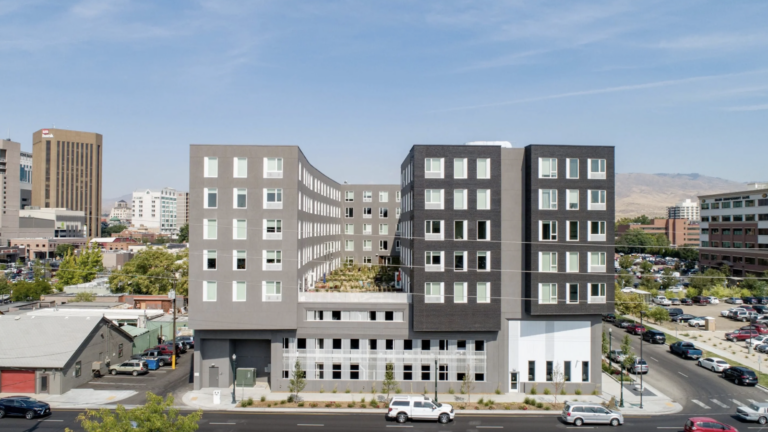
Another project Monjar highlighted was The Martha at 17th and Idaho, a mixed-income housing development created through the disposition of CCDC-owned property. Building on lessons learned from the earlier Ash Street Townhomes project, The Martha incorporated rent restrictions intended to allow working households to live close to downtown, transit and bicycle routes. Monjar praised its “gentle density” and neighborhood scale.
Her work has also extended beyond downtown Boise.
Monjar recalled helping recruit AZEK Company to CCDC’s Gateway East District for its first manufacturing facility in the western United States. Working with Idaho Power, the City of Boise and Boise Valley Economic Partnership, CCDC helped address infrastructure costs that could otherwise have created a significant obstacle to the company’s location decision. Monjar viewed the project as an example of urban renewal supporting skilled manufacturing jobs while building the employment base envisioned for Gateway East.
Looking ahead, Monjar sees similar opportunities in the 30th Street, Shoreline and State Street districts. She pointed to CCDC’s partnership with the City on a sewer lift station in the 30th Street District as an example of removing an infrastructure barrier that had affected several proposed housing developments. With that investment completed, projects such as The Finch have begun moving forward.
The interview concludes with Monjar’s broader view of urban renewal’s effect on Boise. To her, some of its greatest impacts are easy to experience but difficult to quantify: wide sidewalks, trees, landscaping, bicycle infrastructure, active storefronts and streets that make people feel comfortable walking through downtown.
She argues that CCDC’s dedicated funding provides a mechanism for consistently investing in that quality of place. The same principle can be adapted to very different settings. In Gateway East, urban renewal helps extend infrastructure needed for industrial development and job creation. Along State Street, it can help provide sidewalks, sewer connections, transit-supportive improvements and other infrastructure needed by existing neighborhoods.
For Monjar, that adaptability is one of urban renewal’s greatest strengths. Whether supporting a downtown plaza, affordable housing, a manufacturing facility or a neighborhood sidewalk, the underlying concept remains similar: capture some of the value created by growth and reinvest it in infrastructure that enables additional investment and improves the surrounding community.
Her own career reflects that same progression—from asking why cities look and function the way they do to having a direct role in shaping Boise’s future.