Building Boise Through Partnership: Dean Pape on Development, Community and the Power of Urban Renewal
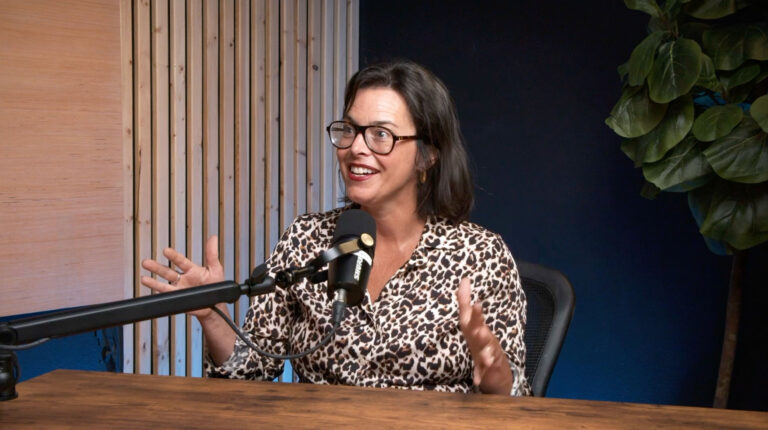
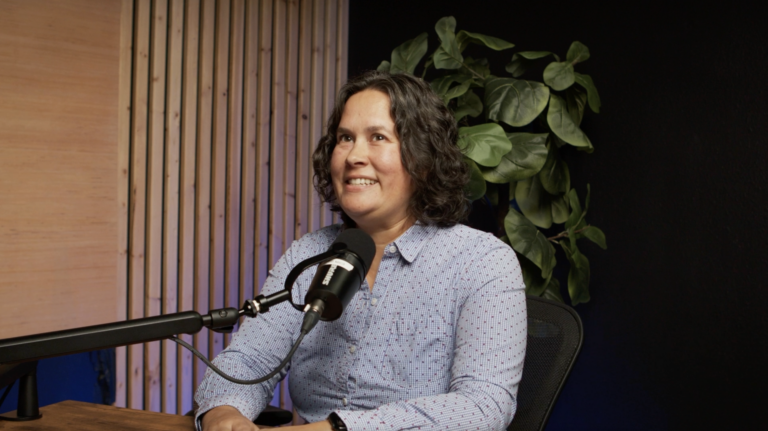
In Episode 9 of The CCDC Effect, Capital City Development Corporation Executive Director John Brunelle sits down with Dean Pape, principal of DeChase Miksis, for a conversation about development, public-private partnerships and the role urban renewal has played in Boise’s transformation.
Pape’s perspective comes from years of working alongside CCDC on projects that have added housing, public spaces and new investment to downtown Boise. During the interview, he makes a striking observation: he isn’t sure DeChase Miksis has completed a Boise project that wasn’t located within a CCDC district.
Their conversation explores not only what has been built, but how collaboration among developers, CCDC, the City of Boise and other partners can turn difficult properties and ambitious ideas into successful projects.
From Oregon to Boise
Pape grew up in Eugene, Oregon, and earned a construction management degree from Oregon State University. After spending time skiing — including a season in Sun Valley — he entered real estate development with Gerding Edlen Development in Portland, where he says he learned the development business.
He started DeChase in 2007, just as the real estate market was heading into the Great Recession. The difficult years that followed forced the young company to be resourceful. Mark Miksis, an architect, later joined the company, bringing design expertise that complemented Pape’s financial and development background.
Pape eventually moved to Boise and began conversations with local property owners Clay Carley and Tim Gibson. Those relationships led to The Gibson, one of the projects that established DeChase Miksis in Boise and began what would become a long-running partnership with CCDC.
The Gibson and a Model for Collaboration
The Gibson became an important early example of the type of development Pape and CCDC would pursue together.
Pape recalls meeting Carley and being shown a map of downtown properties and an ambitious collection of ideas. His response was essentially that they couldn’t do everything at once — they needed a plan. That relationship eventually resulted in five or six projects together, with CCDC participating in the redevelopment occurring within its urban renewal districts.
Brunelle recalls how the timing of The Gibson coincided with CCDC investments in streetscapes, utilities and other public infrastructure. Even details such as the project’s paver alleyway became part of the character of the neighborhood.
For Pape, the lesson was larger than any individual improvement: when the public and private sectors share a vision and work toward the same objective, difficult projects become achievable.
Developing for the Community
DeChase Miksis has expanded beyond Boise, with work in Oregon, Washington, Idaho and Montana. In Idaho, Pape discusses projects in Caldwell and the Wood River Valley, including workforce housing intended to address the “missing middle” — households that may earn too much for traditional low-income housing programs but still struggle to afford market-rate housing.
Rather than specializing in a single building type, Pape says DeChase Miksis takes a geographically focused approach. The company studies the community, its economy, its needs and what may be missing, then looks for projects that can help fill those gaps.
That can mean multifamily housing in one location, for-sale housing in another, or medical offices and industrial development where those uses are needed.
Ash + River: Solving a Complicated Puzzle
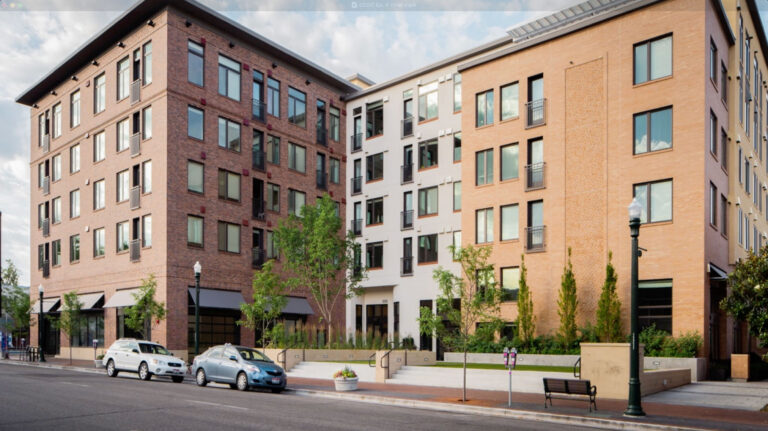
Among the CCDC projects Pape highlights, Ash + River stands out.
The project required coordination among multiple entities and complicated property and infrastructure issues. Yet Pape says the parties continued moving in the same direction toward a solution.
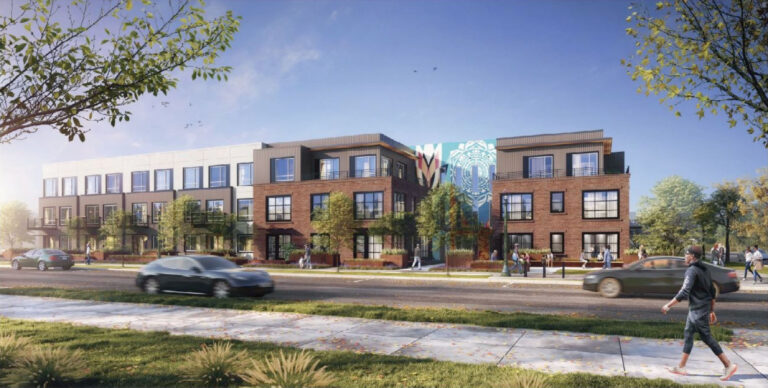
The result was family workforce housing that Pape believes helped catalyze additional activity in the district. Brunelle also points to the project’s relationship with the Pioneer Pathway and the historic Hayman House next door as examples of how development can complement important public and cultural assets rather than overwhelm them.
Ash + River went on to receive the Urban Land Institute’s Jack Kemp Excellence in Affordable and Workforce Housing Award — recognition Brunelle and Pape attribute in part to the many organizations that worked together to make the project successful.
The Martha: Turning a Stalled Property Into Housing
Another favorite project for both Brunelle and Pape is The Martha.
CCDC initially acquired a difficult property that faced environmental challenges and had become stalled. The development team then assembled several surrounding properties to create a viable development site.
Pape credits timing, relationships and persistent conversations with multiple property owners. Brunelle offers another interpretation: “The harder you work, the luckier you get.”
The pace was remarkable. Brunelle notes that only 32 months passed between CCDC closing on its property and the development reaching certificate of occupancy — an unusually fast turnaround for a project involving a public agency, property assemblage and a competitive development process.
The Martha also illustrates Pape’s emphasis on assembling teams with complementary expertise. DeChase Miksis partnered with Shellan Rodriguez and SMR Development because Rodriguez brought specialized affordable and workforce housing knowledge that strengthened the development team.
Pape says recognizing what your own team doesn’t do best — and bringing in people who do — is an important part of successful development.
Giving Back Is Part of the Business
The interview moves beyond buildings to DeChase Miksis’ philosophy about community involvement.
Pape describes “give back” as one of the company’s core values. One example is its “Lunch for Lunch” program, which began about seven years ago and has become part of every DeChase Miksis project.
At project milestones, the company provides lunch for the project team and encourages participants to contribute to a community cause. Those efforts have supported organizations including schools and the Boise Rescue Mission. DeChase Miksis also encourages its employees to contribute their time to community organizations and civic initiatives.
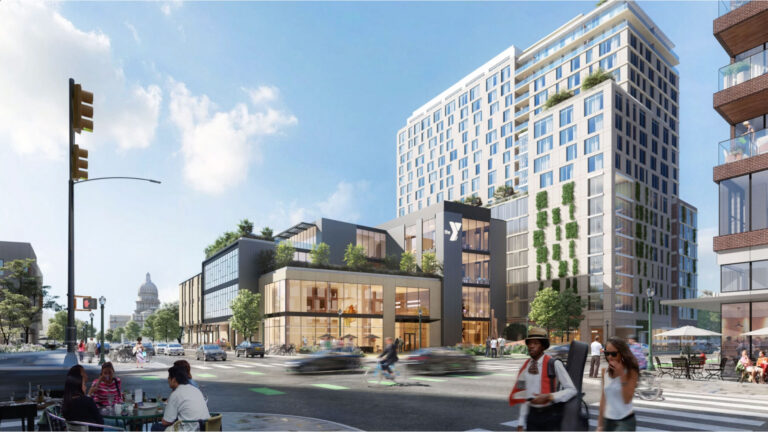
Pape’s connection to the YMCA is particularly personal. His family has been involved with the organization for generations, and his grandfather helped build the original YMCA in Eugene. Pape has continued that tradition and says he has now participated in three YMCA projects.
That connection has particular relevance in downtown Boise as the new YMCA and surrounding redevelopment take shape.
Why Urban Renewal Makes Projects Possible
The heart of the conversation comes when Brunelle asks Pape what Idaho’s urban renewal tool actually means to a private developer.
Pape says he had to learn Idaho’s system after moving from Oregon. Over time, public-private partnerships have become central to the company’s work — he estimates approximately 80% of its projects include some public-private component.
The reason is straightforward: public and private organizations possess different tools.
A developer can bring capital, development expertise, risk tolerance and market knowledge. An urban renewal agency can address infrastructure, public spaces and other costs or challenges that may otherwise prevent a project from moving forward.
Pape points to The Gibson as an example. CCDC’s participation helped make public improvements and open space, including pocket parks, part of the larger development. Infrastructure costs that can be difficult for a private project to absorb become more manageable when a public partner can participate.
Most significantly, Pape tells Brunelle that he doesn’t know of any DeChase Miksis projects in Boise that could have happened without CCDC’s support because the financial structures would not have been viable.
The CCDC approach has proven useful enough that Pape says he has taken examples of Boise’s partnership structures to communities such as Caldwell and Bend as models for how other agencies might help facilitate development.
Trust, Transparency and Delivering What Was Promised
Brunelle also asks why DeChase Miksis has been successful in CCDC’s competitive development processes.
Pape’s answer centers on credibility.
When his team proposes a project, he says, they intend to deliver what they presented. On Ash + River, despite opportunities to make the project cheaper, faster or different, the team stayed committed to what it had promised.
That track record becomes important when another opportunity arises. Public-private partnerships depend on both parties knowing that commitments will be honored.
Pape also emphasizes strong teams and open communication. Successful developers, he says, need to recognize when they lack a particular expertise and bring the right people to the table. Just as important are honest conversations about what can work, what cannot and why.
Looking Ahead
DeChase Miksis recently restructured to become smaller and more focused. Pape explains that as the company grew, its leaders found themselves spending more time running a business and less time pursuing the creative development work they enjoyed.
The company reduced its staff and refocused on collaborative, challenging projects in communities where it believes it can make a difference.
Workforce and middle-income housing will remain an important focus. Pape believes there isn’t a single solution to the housing challenge and says developers and public partners will need to continue experimenting with creative approaches, including housing trust models and other partnership structures.
The CCDC Effect
Near the end of the conversation, Pape reflects on how much Boise has changed since he arrived.
Downtown had far more surface parking and significantly fewer residents. Since then, public vision, private investment and a sustained push for downtown housing have helped create an urban environment where younger generations can live and work downtown while remaining minutes from the Boise River, foothills and airport.
The projects Brunelle and Pape discuss — The Gibson, Ash + River, The Martha and others — tell a consistent story.
Urban renewal does not replace private development. It creates opportunities for the public and private sectors to combine tools, solve problems neither could easily solve alone and produce projects with broader community benefits.
For Pape, the most successful developments come from shared vision, creativity, trust and a willingness to work through complications rather than walk away from them.
And for Boise, the result can be seen throughout downtown: housing where there were once parking lots or underused properties, public spaces incorporated into private development, infrastructure that supports additional investment and neighborhoods that increasingly feel like complete communities.<
As Pape puts it when discussing the future, Boise will continue to grow. His goal — and DeChase Miksis’ — is to keep participating in that growth, bringing lessons from past partnerships forward and finding creative solutions for whatever comes next.