From Housing Pioneer to Developer: Shellan Rodriguez Reflects on the CCDC Effect
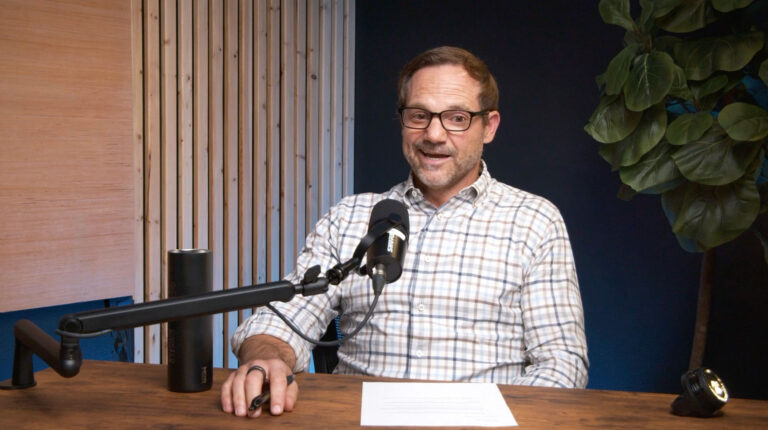
In Episode 8 of The CCDC Effect, Capital City Development Corporation Executive Director John Brunelle sits down with Shellan Rodriguez, founder of SMR Development and a former CCDC team member, for a wide-ranging conversation about housing, urban renewal and the transformation of downtown Boise.
Rodriguez brings a particularly valuable perspective to the discussion. Her career began in affordable housing in the early 2000s, working for a housing authority, statewide nonprofits and private developers before moving to Boise. She later spent more than five years at CCDC, where she gained firsthand experience with Idaho urban renewal law and helped shape several initiatives that continue to influence Boise today. In 2019, she founded SMR Development, focusing on affordable, attainable and workforce housing as well as urban renewal consulting and development.
Helping Prove That Downtown Housing Could Work
A major theme of the interview is just how uncertain downtown residential development was a decade ago.
Brunelle and Rodriguez recall that in 2014 and 2015, relatively little housing existed downtown and developers and lenders were not yet convinced that new, high-quality rental housing could succeed there. CCDC commissioned a housing study to examine downtown services, rents, comparable projects and market potential. The goal was to provide developers, lenders and investors with credible evidence that downtown Boise could support quality rental housing.
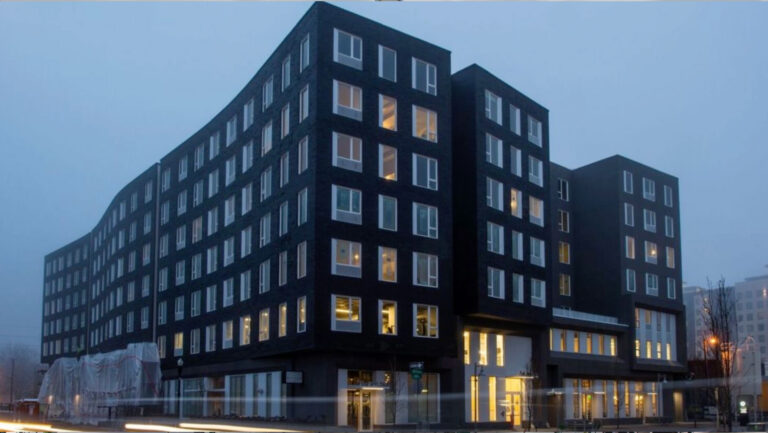
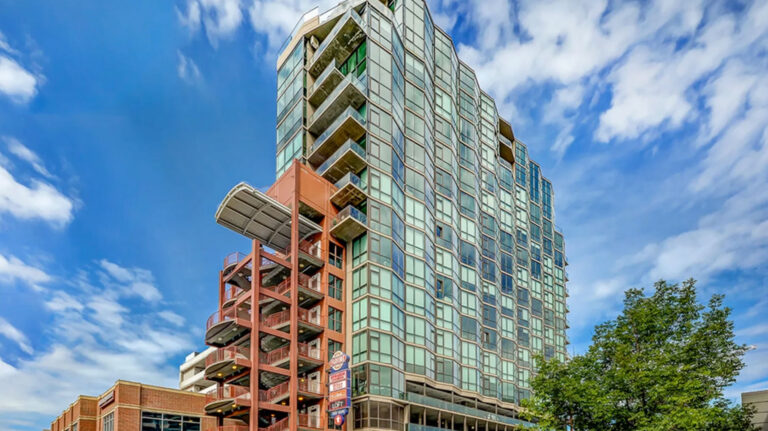
That research, combined with developers willing to take a chance on downtown, helped build confidence in the market. Rodriguez points to The Fowler as an important breakthrough — one of the first major new apartment developments in an area that, at the time, many people questioned as a residential location.
CCDC was prepared to help overcome one of the project’s significant financial challenges: the cost of structured parking. The agency developed a plan to help finance a garage if a floor remained available for public parking. Ultimately, the developer determined the project could support the parking itself and did not need CCDC’s financial assistance. For Rodriguez and Brunelle, that outcome was an ideal example of public-private partnership: CCDC helped reduce risk at a critical moment, but the market ultimately proved strong enough to carry the project on its own.
The success helped give other developers confidence. As Brunelle observes during the interview, what may seem routine today was anything but routine then. The Fowler helped demonstrate that people would choose to live downtown, and residential projects subsequently followed one after another.
Creating Neighborhoods, Not Just Buildings
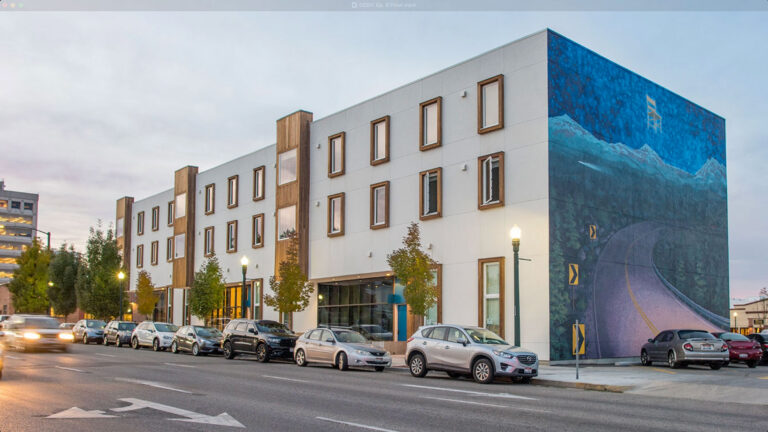
Rodriguez and Brunelle also discuss The Watercooler redevelopment and the importance of mixing housing with restaurants, coffee shops, live-work units and other uses.
Rodriguez argues that housing did more than add residential units. It helped generate the activity necessary to support restaurants and businesses and create more vibrant downtown neighborhoods. The combination of CCDC’s early housing research, strategic assistance and private investment helped establish a market that had previously been largely untested.
Brunelle describes CCDC as a “Swiss Army knife” — an organization willing to innovate and adapt its tools to make complicated public-private partnerships work.
Building the Shoreline Urban Renewal District
Rodriguez’s CCDC tenure also included helping establish the Shoreline Urban Renewal District.
She describes the process as both difficult and exciting, requiring a detailed understanding of urban renewal law, community outreach and careful decisions about district boundaries and future development. The planning process examined the relationship among Boise State University, the Boise River, the Greenbelt, the Lusk District, parks, open spaces and future development.
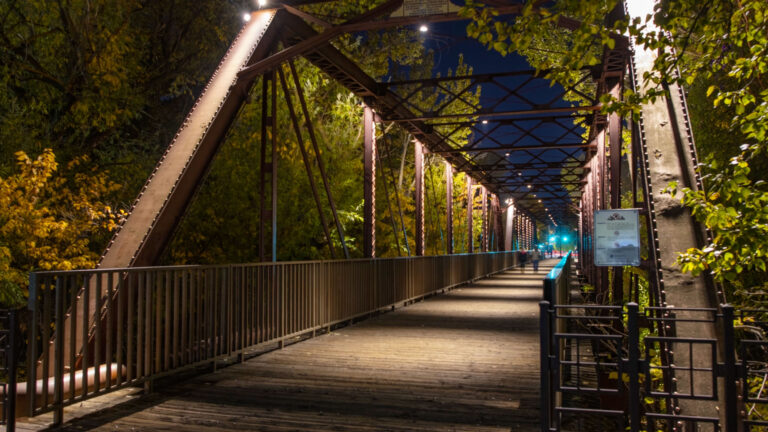
Years later, Brunelle tells Rodriguez that elements of that work remain active, including plans for a pedestrian bridge connecting the Lusk area across the Boise River and continuing work on streetscape standards and bicycle and pedestrian improvements along the Greenbelt.
The Martha: A Textbook Urban Renewal Success
One of the strongest examples discussed in the interview is The Martha.
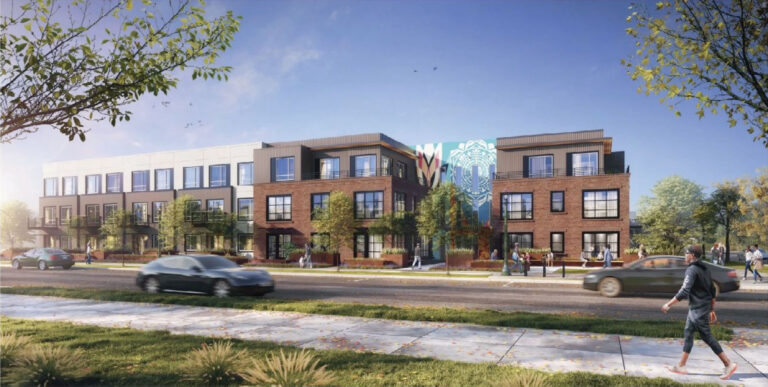
After leaving CCDC, Rodriguez returned to work with the agency from the private development side. Her team responded to a CCDC development opportunity near 17th and Idaho streets and assembled CCDC-owned property with adjacent parcels to make a larger project possible.
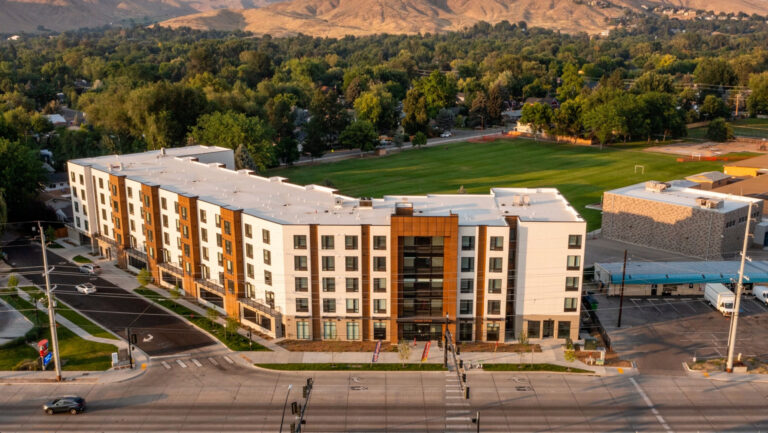
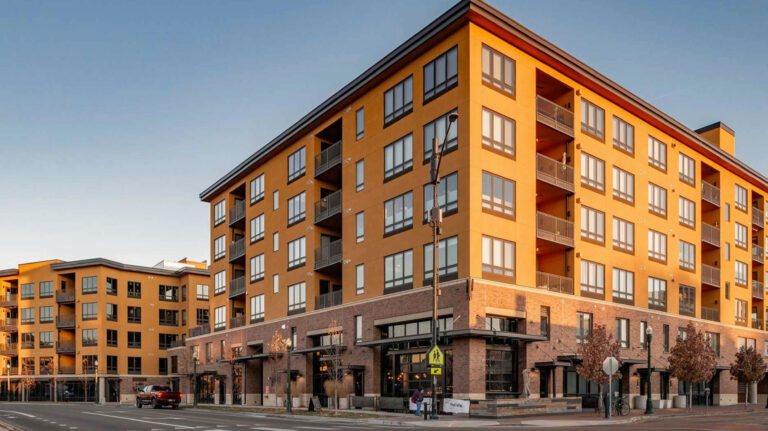
The resulting 48-unit development replaced a deteriorating abandoned house and underused property with new housing. The project primarily includes studios and one-bedroom apartments, along with some two-bedroom units, creating the type of “missing middle” housing Rodriguez believes is particularly important.
CCDC also used its land position to secure long-term affordability requirements. Rodriguez explains that rents are subject to affordability restrictions and that several units are reserved for very low-income residents receiving rental assistance, including people who otherwise could be facing homelessness.
Brunelle calls The Martha a textbook example of how CCDC can work with private developers. From CCDC’s acquisition of the property through the competitive process, land assemblage, development and certificate of occupancy, the transformation occurred in just 32 months.
Taking Risks to Create Transformational Projects
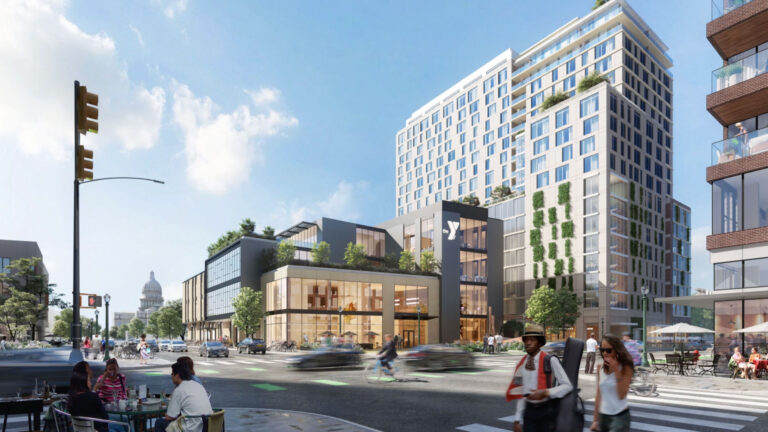
The conversation also revisits the early strategy behind the redevelopment surrounding the Downtown Boise YMCA.
Rodriguez helped CCDC identify and acquire strategic property that could eventually be assembled into a larger public-private redevelopment. At the time, the acquisition carried risk because the ultimate project was still years away. But controlling key pieces of the block eventually helped create the conditions for a much larger transformation involving the YMCA, parking, retail and future housing.
That discussion leads Brunelle and Rodriguez to one of the interview’s central themes: innovation rarely comes with unanimous support.
Rodriguez says she values consensus but does not require it. Sometimes, she notes, if everyone agrees with an idea, it may not be as innovative as it could be. Brunelle connects that philosophy with CCDC’s willingness to challenge the status quo and pursue projects that may initially seem unconventional.
Continuing the Work
Today, Rodriguez continues to develop affordable housing in Idaho and elsewhere. She discusses partnerships with Brighton Companies and The Pacific Companies, as well as Wilson Station, an affordable housing project on State Street that received nearly $800,000 from CCDC for public improvements and also includes a daycare component.
She has also taken lessons learned at CCDC to other communities, including work with the Missoula Redevelopment Agency in Montana to plan the redevelopment of a difficult site into well-designed affordable housing.
Why Urban Renewal Matters
The interview concludes with Rodriguez offering perhaps the clearest explanation of what Brunelle calls “The CCDC Effect.”
Private market forces alone, she says, will not always address properties or neighborhoods where environmental problems, infrastructure deficiencies, financing gaps or other obstacles make redevelopment too difficult. Urban renewal can provide the additional push that changes the equation.
Rodriguez emphasizes that urban renewal funding typically isn’t the majority of a project’s financing. Instead, it can be the strategic piece that gets a developer “over the hump” and results in a project that provides greater community benefit.
The Martha illustrates the point. A troubled property that could have remained stagnant became 48 homes serving a range of residents, including nurses, teachers, public servants and people transitioning out of homelessness. Surrounding improvements to streets, transit and bicycle infrastructure further multiplied the impact.
Rodriguez also highlights the Gem State Housing Alliance, where she serves on the board. The statewide nonprofit works with Idaho communities to identify ways to create more affordable and attainable housing and expand the range of housing types available to Idahoans.
Ultimately, Brunelle and Rodriguez’s conversation illustrates how urban renewal works when it is most effective: not by replacing private investment, but by creating the conditions that allow private investment to happen — and encouraging projects that deliver greater public benefit.
From helping prove the market for downtown apartments to assembling difficult properties, supporting affordable housing and planning for transformational redevelopment, the projects discussed in the interview demonstrate how strategic public investment, strong private partners and a willingness to innovate have helped reshape Boise.
And in many cases, the most important measure of success is that projects once considered risky or improbable now simply feel like part of the city.